

Saratoga spittlebug
- noun
- Specialized
- The Saratoga spittlebug creates foam that protects it while it feeds on pine trees.
Examples
-
The Saratoga spittlebug is notorious for damaging pine trees in northeastern forests.
-
Researchers study the Saratoga spittlebug to better understand its impact on pine ecosystems.
-
I found a bush covered in the foamy secretions typical of the Saratoga spittlebug.
-
The Saratoga spittlebug is often found on pine trees.
-
Many Saratoga spittlebugs can damage pine forests.
-
Researchers study the Saratoga spittlebug to learn how it affects the health of pine forests.
-
In late summer, the Saratoga spittlebug can be seen clustered on the trunks of pine trees.
Synonyms

A small insect that feeds on pine trees in northern United States and makes foam on needles
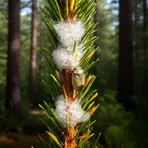
An insect in North America that feeds on pine trees and makes foamy masses on branches
Surface Forms
Morphology
This is a straightforward place-name + species compound: 'Saratoga' (a location) + 'spittlebug' (a type of insect). A B1 learner who knows both constituents can infer it denotes the spittlebug associated with or named after Saratoga, following common naming patterns, so the meaning is directly derivable from the parts.
Etymology
Saratoga spittlebug gets its name from the place Saratoga where it was first found and from the words spittle and bug, because the young bugs make a white foam that looks like 'spit' on plants. That's why the name refers to a small bug that 'feeds on pine trees'.

