

Samia cynthia
- noun
- Specialized
- The larvae of Samia cynthia are commonly found on ailanthus trees.
Examples
-
Samia cynthia was introduced into North America in the mid-19th century.
-
Entomologists study Samia cynthia for its impact on local ecosystems.
-
The Samia cynthia is known for its striking colors.
-
Many gardeners enjoy observing the Samia cynthia in their backyards.
-
Entomologists study Samia cynthia to understand its behavior and role in local ecosystems.
-
The larvae of Samia cynthia primarily feed on the leaves of the ailanthus tree, making it significant in its habitat.
-
Samia cynthia has become a popular subject for butterfly enthusiasts due to its unique appearance.
Synonyms
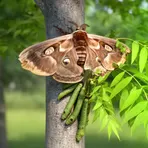
A large moth from Asia whose caterpillars eat a tree called ailanthus
Surface Forms
Morphology
Samia + cynthia
This is a scientific Latin binomial (genus + species). A learner who knows 'Samia' can infer the phrase names a type of Samia moth, but the species epithet 'cynthia' has no ordinary lexical meaning and taxonomic naming conventions are specialist knowledge, so the full specific meaning (a large green silkworm cultivated for silk) is not predictable.
Etymology
Samia cynthia is the scientific name for a large moth from Asia that people brought to North America in the mid-1800s. People often found these moths near the ailanthus tree because their caterpillars eat its leaves, so the name now means 'a large moth that lives on the ailanthus tree'.

