

Rudbeckia serotina
- noun
- Specialized
- In Maryland, Rudbeckia serotina is celebrated as the official state flower.
Examples
-
Many wildflower meadows in the southeastern United States are filled with Rudbeckia serotina.
-
The Rudbeckia serotina brightened the garden with its vivid yellow petals and dark center.
-
The Rudbeckia serotina blooms beautifully in late summer.
-
I planted Rudbeckia serotina in my garden last spring.
-
In Maryland, Rudbeckia serotina is celebrated as the official state flower.
-
Many wildflower meadows in the southeastern United States are filled with Rudbeckia serotina.
-
The Rudbeckia serotina brightened the garden with its vivid yellow petals and dark center.
Synonyms


 1
5.1
1
5.1
A North American plant with yellow or orange petals and a dark center that grows in fields and gardens
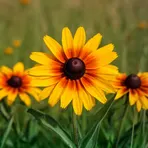
A North American flowering plant with yellow or orange petals and a dark centre
How Showy

Surface Forms
Morphology
The term is a Latin binomial combining the genus name Rudbeckia (a perennial cone‑flower) with the specific epithet serotina, so a learner who knows both constituents can infer it refers to a particular species of Rudbeckia (a flowering plant). Binomial taxonomic naming is a standard, cross‑linguistic convention, making the composition of meaning transparent even if some botanical knowledge is specialized.
Etymology
Rudbeckia serotina is named after the Swedish plant scientist Rudbeck and the Latin word serotina, which means 'late'. One easy memory hook is that this daisy-like flower often blooms later in the season, so the 'late' part helps explain its name.