

Rubus ursinus loganobaccus
- noun
- Specialized
- The Rubus ursinus loganobaccus produces large, tangy berries ideal for jam making.
Examples
-
Many home gardeners in California cultivate Rubus ursinus loganobaccus for its flavorful fruit.
-
Rubus ursinus loganobaccus thrives in the mild coastal climates of Oregon and northern California.
-
I found some fresh Rubus ursinus loganobaccus at the farmer's market.
-
Have you ever tasted a Rubus ursinus loganobaccus?
-
Many home gardeners in California cultivate Rubus ursinus loganobaccus for its flavorful fruit.
-
The Rubus ursinus loganobaccus produces large, tangy berries ideal for jam making.
-
I found some fresh Rubus ursinus loganobaccus at the farmer's market.
Synonyms
 2
8.7
2
8.7

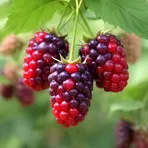
A large tangy red or purple berry like a mix of raspberry and blackberry
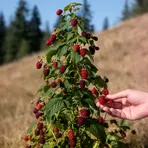
A wild bush from western North America that makes red edible berries called loganberries
Surface Forms
Morphology
Rubus + ursinus + loganobaccus
This is a Latin taxonomic name (genus + specific/cultivar epithets) whose constituents are not ordinary English words and carry no transparent compositional meaning for a B1 learner. Knowing 'Rubus' only as a genus label and seeing unknown forms like 'ursinus' and 'loganobaccus' does not allow one to infer the specific meaning 'loganberry', so the expression is lexicalized technical terminology and therefore opaque.
Etymology
Rubus ursinus loganobaccus breaks into parts you can picture: Rubus means a 'bramble' or wild berry bush, ursinus means 'bear-like' because bears loved to eat the fruit, and loganobaccus remembers a gardener called Logan who helped create the red loganberry. So the name points to a red, tasty bramble we now call the 'loganberry'.