
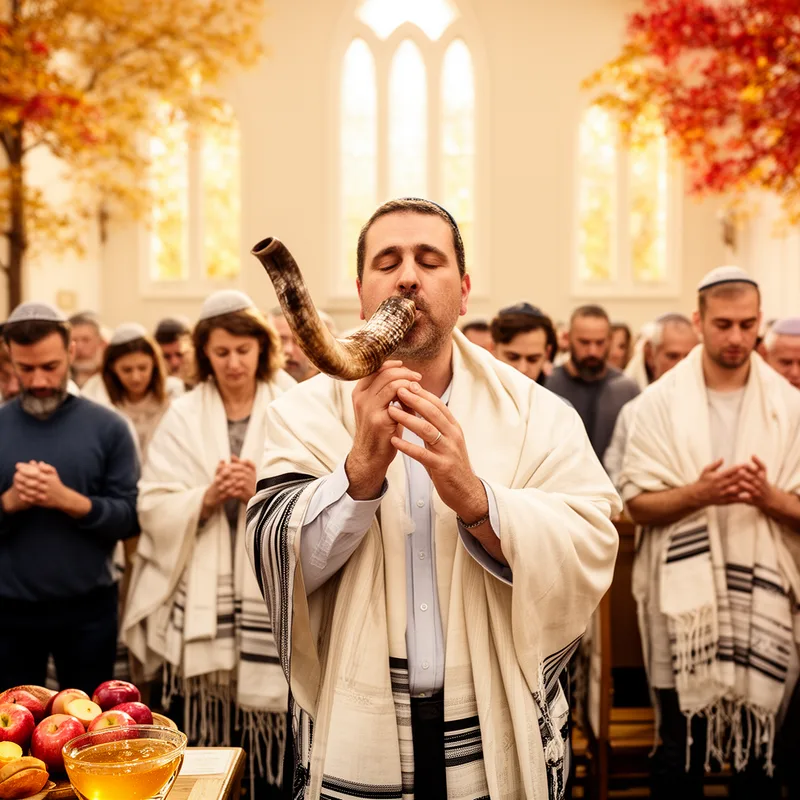
Rosh Hashonah
- proper noun
- /roʊʃ hɑːʃoʊˈnɑː/
- Jargon
- The sound of the shofar marks the beginning of Rosh Hashonah in synagogues around the world.
Examples
-
The sound of the shofar marks the beginning of Rosh Hashonah in synagogues around the world.
-
During Rosh Hashonah, it is customary to wish others a sweet and prosperous New Year.
-
Every year, my family gathers to celebrate Rosh Hashonah with traditional prayers and meals.
-
We celebrate Rosh Hashonah with family gatherings.
-
Are you ready for Rosh Hashonah this year?
-
During Rosh Hashonah, it is customary to wish others a sweet and prosperous New Year.
-
Every year, my family gathers to celebrate Rosh Hashonah with traditional prayers and meals.
Synonyms
 3
7.2
3
7.2

A Jewish holiday that marks the New Year with prayer and the sound of a ram's horn
 1
5.3
1
5.3
A solemn Jewish festival that marks the start of the year with prayers and the blowing of a horn

A Jewish festival that marks the new year with prayer and the blowing of a ram's horn

A Jewish new year holiday marked by prayer and the sounding of a ram's horn
Surface Forms
Morphology
Rosh + Hashonah
Rosh Hashonah is a proper name borrowed from Hebrew whose constituents are not English lexical items a B1 learner would know; the festival meaning (Jewish New Year, shofar, prayer) is culturally specific and cannot be derived from the surface words. Understanding this expression requires knowledge of Hebrew roots or cultural background rather than simple composition, so it is not transparently interpretable by learners who only know the literal constituents.
Etymology
Rosh Hashonah literally comes from the Hebrew words Rosh meaning 'head' and Hashonah meaning 'year', so the name gives the clear image of the 'start of the year'. That's why Rosh Hashonah is the Jewish 'New Year' when people pray, think about the past year, and listen to the shofar.