
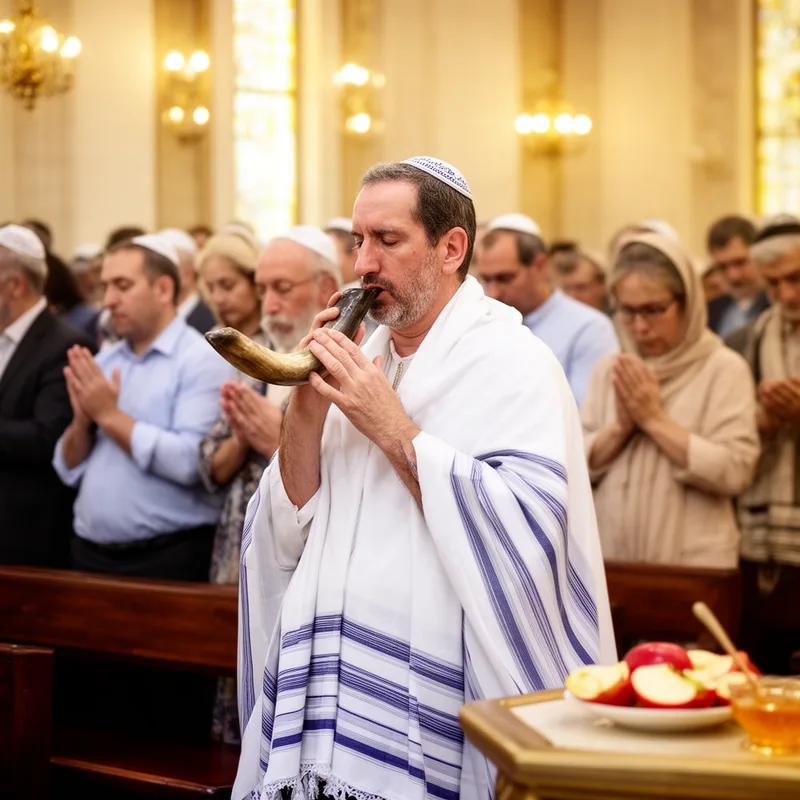
Rosh Hashona
- noun
- /roʊʃ hɑːˈʃoʊnə/
- Jargon
- The sound of the shofar is a distinctive part of Rosh Hashona services.
Examples
-
Many families gather together to celebrate Rosh Hashona with traditional foods.
-
During Rosh Hashona, people reflect on the past year and make resolutions for the new one.
-
Happy Rosh Hashona!
-
Let's celebrate Rosh Hashona!
-
During Rosh Hashona, people reflect on the past year and make resolutions for the new one.
-
Many families gather together to celebrate Rosh Hashona with traditional foods.
-
The sound of the shofar is a distinctive part of Rosh Hashona services.
Synonyms
 3
7.2
3
7.2

A Jewish holiday that marks the New Year with prayer and the sound of a ram's horn
 1
5.3
1
5.3
A solemn Jewish festival that marks the start of the year with prayers and the blowing of a horn

A Jewish festival that marks the new year with prayer and the blowing of a ram's horn

A Jewish New Year festival in early autumn marked by prayer and the blowing of a ram's horn
Surface Forms
Morphology
Rosh + Hashona
The constituent elements are Hebrew loanwords rather than English lexemes, but their literal composition (rosh = 'head', hashona/hanah ≈ 'of the year') yields 'head of the year', which directly signals the start of the year and thus the New Year festival. Full cultural nuance (services, shofar blowing) requires background knowledge, but the core meaning 'Jewish New Year' is transparently derivable from the parts.
Etymology
Rosh Hashona comes from Hebrew words Rosh and Hashona that mean 'head of the year'. The image to remember is the sound of the shofar, a ram's horn, used to wake people to pray and think about the past year, so the name and the horn explain why the day marks the Jewish 'New Year' and a time to think and change.