
Rodya Raskolnikov


 1
9.9
- proper noun
- Literature
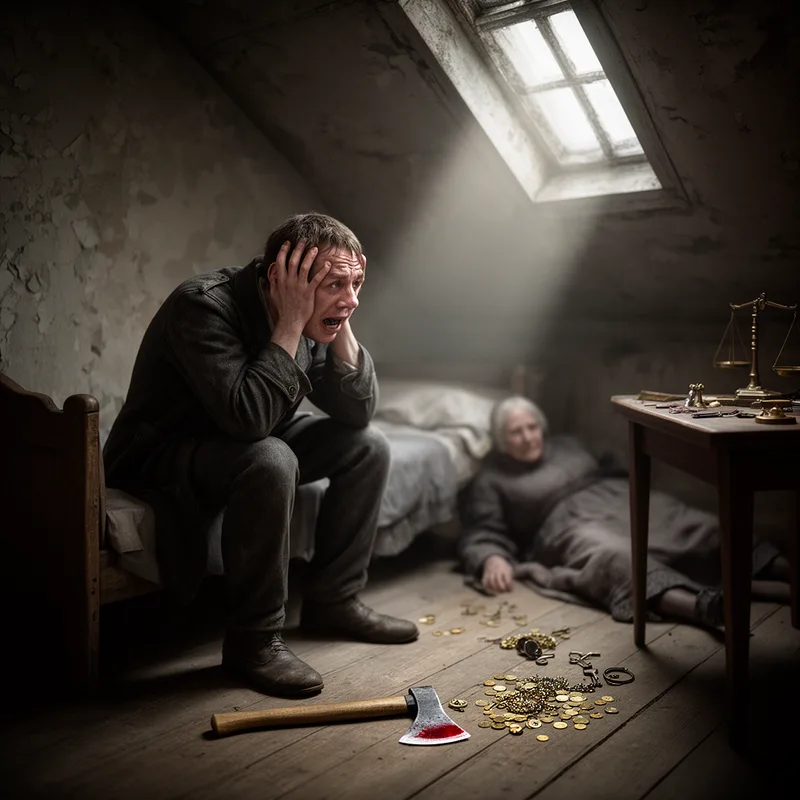
- Throughout the novel, Rodya Raskolnikov grapples with his conscience after murdering a pawnbroker.
Examples
-
Rodya Raskolnikov is tormented by guilt throughout Dostoevsky's 'Crime and Punishment'.
-
The character of Rodya Raskolnikov has inspired countless discussions on morality and justice.
-
Many readers sympathize with Rodya Raskolnikov's internal struggles and philosophical conflicts.
-
In Rodya Raskolnikov, Dostoevsky explores deep philosophical questions.
-
Many readers find Rodya Raskolnikov to be a fascinating character.
-
Rodya Raskolnikov commits a shocking crime that leads him on a path of moral questioning in Dostoevsky's 'Crime and Punishment'.
-
Rodya Raskolnikov represents the struggle between rationality and morality in Dostoevsky's exploration of crime.
Synonyms
 4
9.9
A character in Dostoevsky's novel who kills because he thinks he is above right and wrong
 2
9.9
The main character in Crime and Punishment who kills a woman who runs a pawn shop and feels deep guilt
Surface Forms
Morphology
Rodya + Raskolnikov
This is a personal name (a literary character) rather than a compositional phrase; the meaning 'central character in Crime and Punishment who murders a pawnbroker' cannot be derived from the parts—one element is not a lexical word and the surname does not encode those traits. Knowing the constituent forms therefore does not give a B1 learner the required cultural/literary information, so the expression is non-compositional and requires prior exposure.
Etymology
Rodya Raskolnikov comes from Dostoevsky's novel 'Crime and Punishment'. He is a poor former student who kills a pawn shop owner because he believes some people are 'above the law'. That's why his name now suggests a person troubled by guilt and big moral questions.