

Raskolnikov
 4
9.9

- proper noun
- /ræˈskɒlnɪkɒf/
- Literature
- In Dostoevsky's novel, Raskolnikov struggles with his conscience after committing murder.
- Mr. Raskolnikov
Examples
-
It was much more important to decide if Raskolnikov had a right to kill the old usurer.
Fiction book (1996) -
In Dostoevsky's novel, Raskolnikov deals with the tormenting question of whether or not he is an extraordinary individual.
Academic text (1992) -
Raskolnikov, "who killed two ladies," is mentioned.
Academic text (1992) -
Characters: Rodya Raskolnikov, a university student.
Fiction book (1998) -
In the novel, Dostoevsky asks whether or not Raskolnikov is a Napoleon, an extraordinary man.
Academic text (1992) -
In Crime and Punishment, Raskolnikov (which means the divided one) is reconciled with his "feminine side" with the help of the love of Sonia.
Blog text (11) -
Crime and Punishment, for example, focuses on the claim of intelligentsia superiority, which is transformed into Raskolnikov's division of humanity into "extraordinary people" to whom "all is permitted" and ordinary people, who serve as mere breeders.
Academic text (1994) -
The character of Raskolnikov embodies the conflict between morality and ideology in 'Crime and Punishment.'
-
As a central figure in the story, Raskolnikov grapples with the justification of his actions throughout the narrative.
Synonyms
 2
9.9
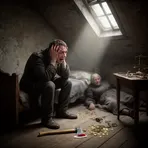
The main character in Crime and Punishment who kills a woman who runs a pawn shop and feels deep guilt

 1
9.9
The central character in Dostoevsky's Crime and Punishment who kills a pawnbroker and feels guilty
Surface Forms
Etymology
Raskolnikov comes from the Russian root raskol, which means 'split' or 'division', and the ending -nikov, which shows a person 'of' or 'connected to', like 'son' in English names. So the name gives the image of someone with a 'split' mind, which fits the character who is torn by guilt and hard moral questions.