
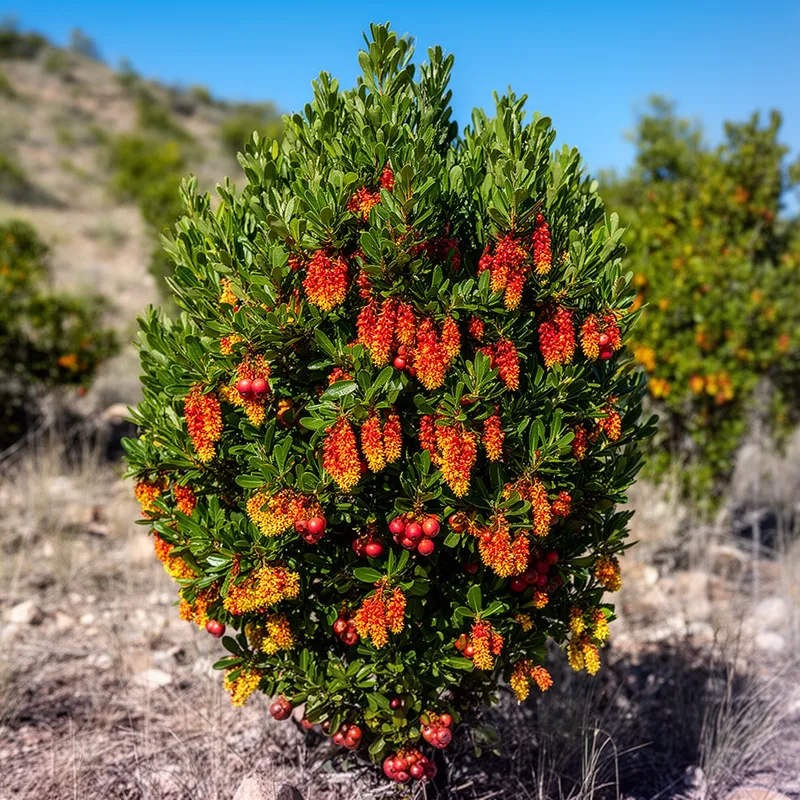
Rhus ovata
- noun
- Specialized
- Botanists study the glandular fruit of Rhus ovata for its unique adaptations.
Examples
-
The Rhus ovata grows abundantly in the chaparral regions of California.
-
Hikers admire the bright flower clusters of Rhus ovata in spring.
-
The Rhus ovata is a beautiful shrub.
-
I saw a Rhus ovata in the garden.
-
Hikers admire the bright flower clusters of Rhus ovata in spring.
-
The Rhus ovata grows abundantly in the chaparral regions of California.
-
Botanists study the glandular fruit of Rhus ovata for its unique adaptations.
Synonyms

An evergreen shrub with reddish yellow flower spikes and sticky, hairy fruits

A small evergreen bush with reddish yellow flower spikes and hairy fruits
Surface Forms
Morphology
Rhus + ovata
This is a botanical binomial: knowing 'Rhus' (the sumac genus) lets a learner infer the expression refers to a kind of shrub, but the second element 'ovata' is a Latin epithet (undefined here) and not transparent to an average B1 learner, so the full descriptive meaning cannot be derived from the parts. The genus gives partial category information but the specific sense remains unpredictable without prior exposure or knowledge of botanical Latin.
Etymology
Rhus ovata comes from old plant names: Rhus was the old name for 'sumac' and ovata comes from a word meaning 'egg-shaped', because the shrub's leaves are rounded like small eggs, so the name describes this evergreen shrub.

