
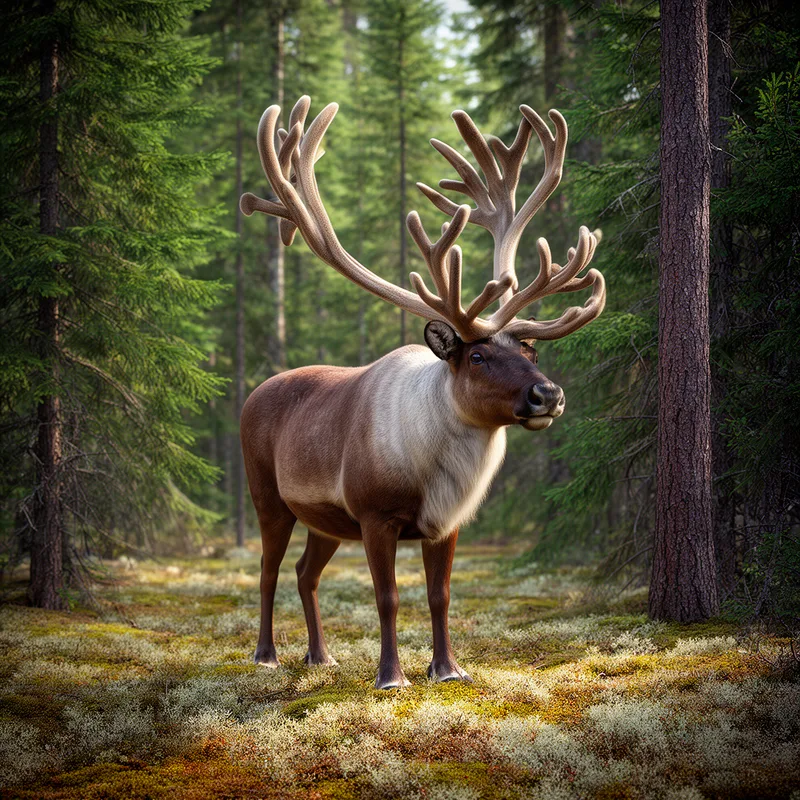
Rangifer caribou
- noun
- /ˈræŋɪfər ˈkɛrɪbu/
- Specialized
- The Rangifer caribou is well adapted to the coniferous forests of southern Canada.
Examples
-
The Rangifer caribou is known for its impressive antlers.
-
Many Rangifer caribou migrate to find food.
-
Conservation efforts are underway to protect the dwindling numbers of Rangifer caribou in the wild.
-
Researchers are monitoring the migration patterns of the Rangifer caribou to better understand their habitat needs.
-
Conservation efforts are underway to protect the dwindling numbers of Rangifer caribou in the wild.
-
Researchers are monitoring the migration patterns of the Rangifer caribou to better understand their habitat needs.
-
The Rangifer caribou is well adapted to the coniferous forests of southern Canada.
Synonyms
A large wild deer with antlers that lives in pine forests in parts of Canada
Surface Forms
Morphology
The phrase is a straightforward taxonomic combination: 'Rangifer' names a genus of deer and 'caribou' names the species, so together they denote a particular type of caribou. This compositional, scientific-name pattern is predictable and cross-linguistically familiar, so a B1 learner who knows both constituent meanings can infer the MWE meaning.
Etymology
Rangifer caribou mixes a Latin scientific name with a local animal name: Rangifer links it to reindeer, and one popular story says caribou comes from a Native word meaning 'to scrape' because the animals scrape snow to find food. So the name helps you remember it is a reindeer-like animal that lives in forests and scrapes snow to feed.

