

Quercus suber
- noun
- Specialized
- The bark of Quercus suber is harvested sustainably to produce natural cork stoppers for wine bottles.
Examples
-
In its native habitat, Quercus suber supports a unique ecosystem of wildlife and plants.
-
The Quercus suber is commonly found in Portugal.
-
Scientists are studying Quercus suber for its resilience to drought and role in preventing soil erosion.
-
Many Quercus subers are harvested for cork production.
-
The Quercus suber, commonly known as the cork oak, thrives in the Mediterranean climate of southern Europe.
-
The bark of the Quercus suber is harvested every nine years to produce cork for wine bottles.
-
Conservation efforts are important to protect the Quercus suber forests, which support diverse wildlife.
Synonyms
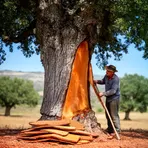
A Mediterranean evergreen oak tree with very thick bark people remove to make cork

An evergreen oak tree with thick bark used to make cork
How Big


Surface Forms
Morphology
This is a Latin binomial combining a genus name (Quercus = oaks) with a species epithet (suber) so a learner who knows both constituents can infer it denotes a particular kind of oak — specifically the cork oak with thick, corky bark. The taxonomic genus+species pattern is systematic and cross-linguistically recognizable, making the overall meaning compositional rather than idiomatic.
Etymology
Quercus suber is the scientific name for the cork oak. The name tells the story: Quercus means 'oak' and suber means 'cork', because this tree has very thick, sponge-like bark that people peel off to make cork stoppers, so the name points to its use as 'cork'.