
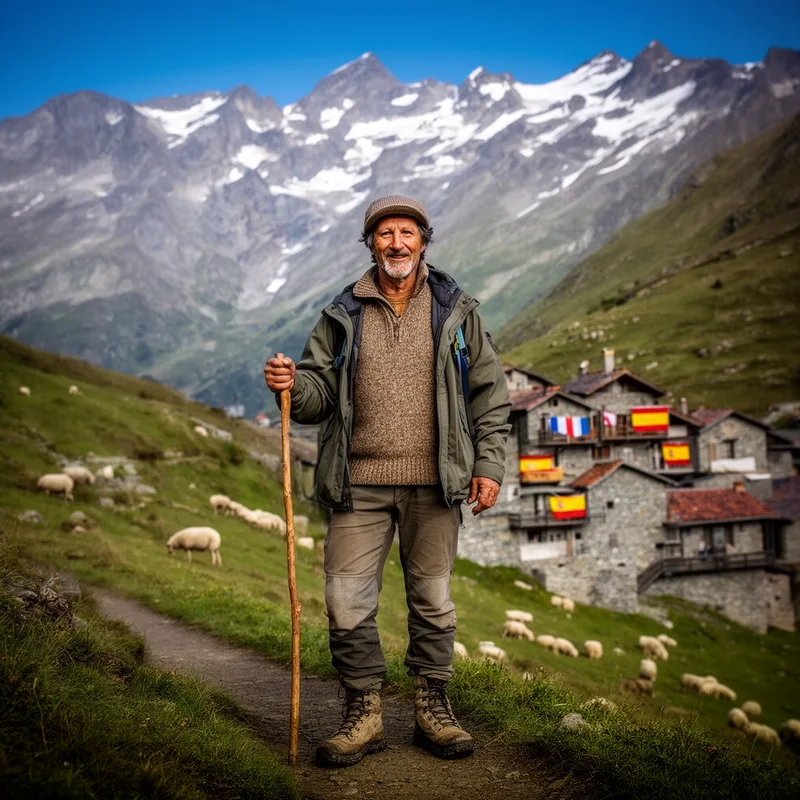
Pyrenean
- noun
- /ˌpɪrəˈniːən/
- Domestic animals exploited Pyrenean puertos 7,000 years ago (Geddes 1983), and after the eleventh century, transhumance between the Pyrenees and the lowlands became very important.
Examples
-
APyrenean enjoys hiking in the stunning mountain landscape of the Pyrenees.
-
The cloned fetus, which contained reanimated DNA from the last known living Pyrenean ibex, was successfully brought to term after being implanted in the womb of a living domestic goat.
Blog text (11) -
The Pyrenean ibex became the first extinct animal to ever become un-extinct; unfortunately, it only lasted for seven minutes.
Blog text (11) -
Many of the flocks registered in the Pyrenean uplands should be registered in the lowlands, where the sheep farmers live.
Academic text (2011) -
Spain caused a tree branch to fall on Celia, the last Pyrenean Ibex, crushing her skull.
Academic text (2010) -
Nevertheless, it is becoming increasingly important, as confirmed by the fact that almost 57,000 sheep ascend the Pyrenean puertos in the warm season.
Academic text (2011) -
Amazing Extinct Animals Resurrected by Cloning the Pyrenean Ibex
Blog text (11) -
Both changes enabled Pyrenean farmers to enlarge their flock sizes and prolong their presence on the upland pastures.
Academic text (2011) -
Above 1,500-1,600 meters, subalpine and alpine pastures constitute the so-called Pyrenean puertos.
Academic text (2011) -
As a proudPyrenean, she shared stories of her family's history in the mountains.
Surface Forms
Morphology
Etymology
Pyrenean comes from the name of the Pyrenees, the mountains on the border between France and Spain. As a noun, a Pyrenean is a person 'from the Pyrenees', someone who lives in or comes from those mountain villages.

