
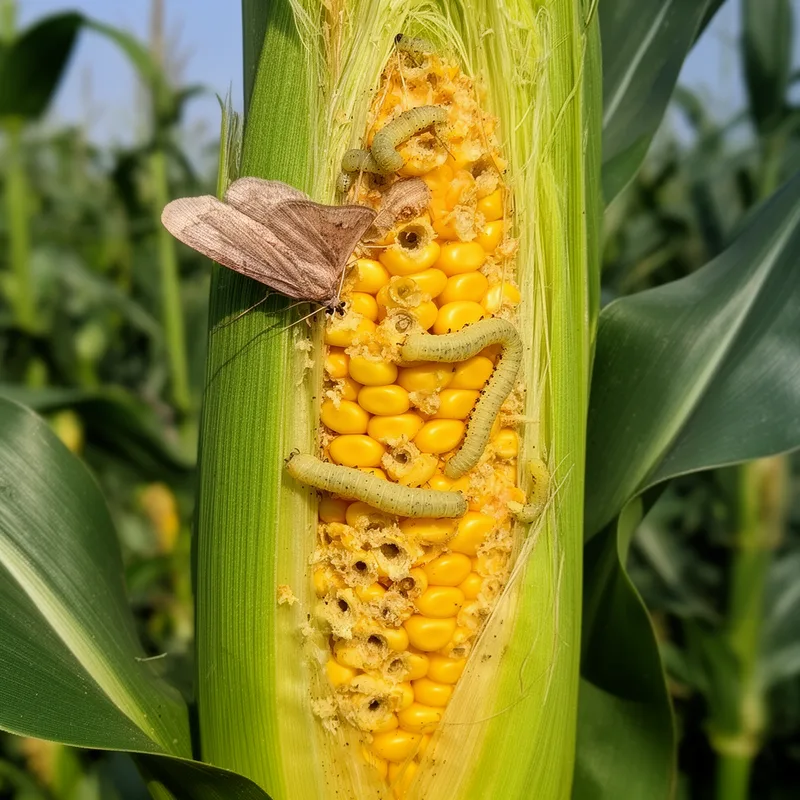
Pyrausta nubilalis
- noun
- Specialized
- Pyrausta nubilalis larvae can cause serious damage to cornfields if not controlled.
Examples
-
Farmers often implement control measures to reduce the impact of Pyrausta nubilalis on their crops.
-
Research on Pyrausta nubilalis has led to the development of resistant corn varieties.
-
Pyrausta nubilalis is a significant pest in maize-producing regions of the United States.
-
The Pyrausta nubilalis is a significant pest for farmers.
-
Farmers are concerned about Pyrausta nubilalis infestations.
-
The presence of Pyrausta nubilalis often requires farmers to take preventive actions to protect their harvests.
-
Pyrausta nubilalis is known for its ability to quickly infest and weaken crops, especially corn.
Synonyms


 1
7.7
1
7.7
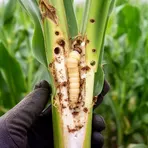
An insect, usually a moth or its caterpillar, that eats holes in corn stems and harms the crop
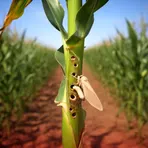
A small moth whose young caterpillars make holes in corn stems and damage crops
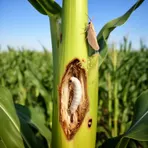
A small moth whose caterpillars tunnel into corn stems and damage crops
Surface Forms
Morphology
Pyrausta + nubilalis
This is a Latin binomial taxonomic name rather than a compositional English phrase: 'Pyrausta' is a genus label and 'nubilalis' is a non-English specific epithet (not a productive English word). A B1 learner who knows the listed constituents would not be able to derive the specialised meaning 'a species of moth (European corn borer) whose larvae damage corn' from those parts, so the expression is opaque.
Etymology
Pyrausta nubilalis comes from older words: Pyrausta links to 'fire' in old stories, and nubilalis comes from Latin for 'cloudy' because its wings have a cloudy, spotted look. So the name gives a picture of a small, cloud-patterned moth, and today it refers to a moth whose young caterpillars damage corn and other crops.