
Pygopodidae
- noun
- /ˌpaɪɡəˈpɒdəˌdeɪ/
- Australian
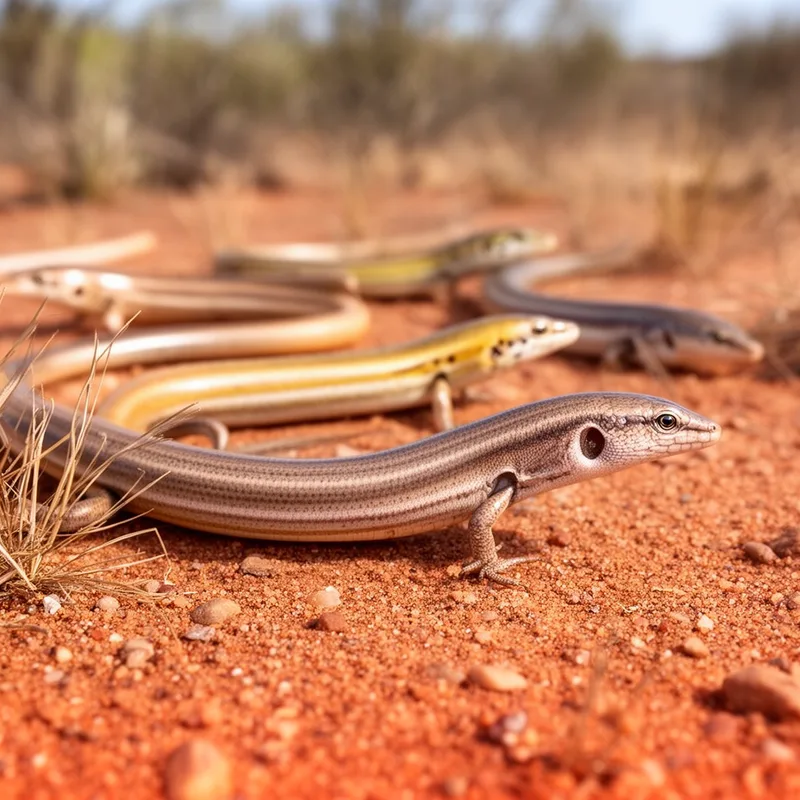
- Unlike snakes, members of Pygopodidae have remnants of hind limbs and external ear openings.
Examples
-
Scientists discovered a new species within the Pygopodidae family in Western Australia.
-
Did you know that Pygopodidae are found only in Australia?
-
The Pygopodidae family demonstrates remarkable adaptation to their arid environments.
-
The Pygopodidae family includes several species of legless lizards.
-
Scientists discovered a new species within the Pygopodidae family in Western Australia.
-
The Pygopodidae family demonstrates remarkable adaptation to their arid environments.
-
Unlike snakes, members of Pygopodidae have remnants of hind limbs and external ear openings.
Synonyms
A group of legless lizards from Australia and Tasmania that look like snakes
Compounds
- Specialized
A group of legless lizards from Australia and Tasmania that look like snakes
Surface Forms
Morphology
Pygopodidae = pygopod (opaque) = pygopod + idae
The word is a scientific family name formed from a taxonomic suffix '-idae' attached to a technical stem; the Greek combining elements and the taxonomic formation are not readily interpretable by an average B1 learner.
Etymology
Pygopodidae comes from Greek parts pygo- ('rump') and -pod ('foot') plus -idae ('family'), so the name literally means 'rump-foot family'. These Australian lizards look like snakes but have tiny back feet near their rumps, which explains the name.

