
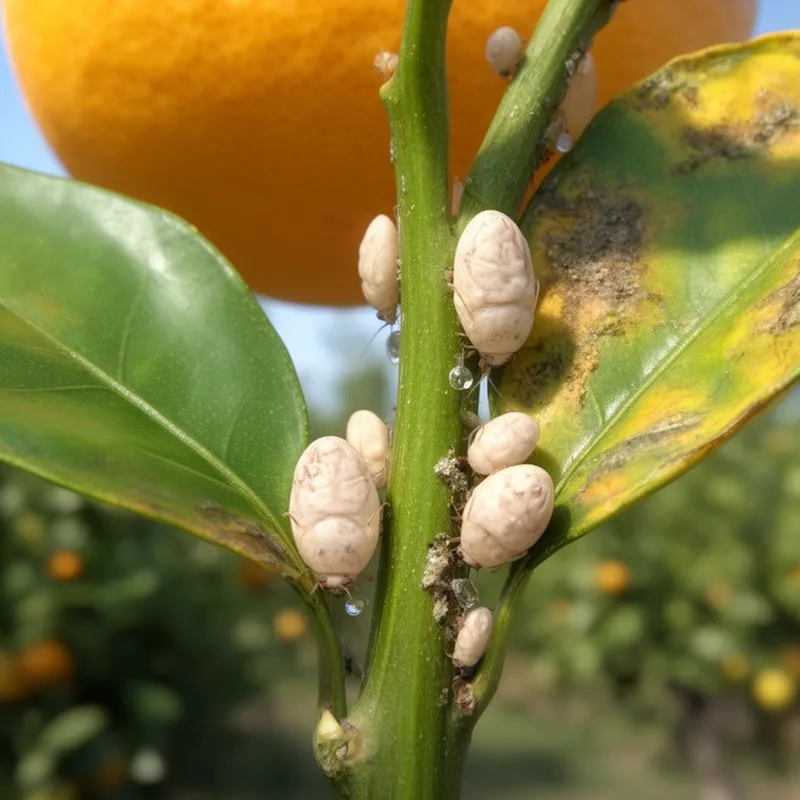
Pseudococcus
- noun
- Specialized
- Scientists studied the life cycle of Pseudococcus under laboratory conditions.
Examples
-
The vineyard was infested with Pseudococcus species, causing significant crop damage.
-
Effective pest control is necessary to manage Pseudococcus populations on citrus plants.
-
The Pseudococcus infestation damaged the tomato plants.
-
Farmers often struggle with Pseudococcus in their greenhouses.
-
Farmers often struggle with Pseudococcus infestations in their greenhouses due to their sap-sucking behavior.
-
The vineyard was infested with Pseudococcus species, causing significant damage to the grape harvest.
-
Effective pest control is essential to manage Pseudococcus populations that affect various agricultural crops.
Synonyms

A group of small insects called mealybugs that damage plants
Compounds
Surface Forms
Morphology
Etymology
The word Pseudococcus comes from the Greek parts pseudo- ('false') and coccus ('berry'), and the pseudo- part is the same as in pseudonym. So Pseudococcus means 'false berry', a helpful image to remember that these small, round, white insects look like tiny berries but are actually sap-sucking bugs.

