

Prokayotae
- noun
- /proʊˈkeɪəˌti/
- Archaic
- The kingdom Prokayotae includes many microscopic organisms such as bacteria.
Examples
-
The kingdom of Prokayotae includes various types of bacteria.
-
Recent discoveries have led to a better understanding of the diversity within Prokayotae.
-
Scientists debated the classification criteria for Prokayotae throughout the 20th century.
-
Many scientists study Prokayotaes to understand their role in ecosystems.
-
The kingdom Prokayotae is essential for understanding the evolution of simple life forms.
-
Research on Prokayotae has revealed crucial information about bacterial behavior.
-
Many diseases are caused by organisms classified under the Prokayotae kingdom.
Synonyms


 1
9.9
1
9.9
Single cells that do not have a nucleus, like bacteria
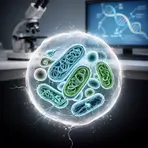
A former group of single-celled living things without a nucleus, like bacteria

Very small simple living things like bacteria that have no nucleus in their cells
Surface Forms
Etymology
Prokayotae comes from the Greek parts pro- meaning 'before' and karyon meaning 'kernel' or 'nut', like the little 'core' of a cell. So Prokayotae names bacteria and similar tiny organisms whose cells do not have a true nucleus, meaning they are 'before' or without that clear 'core'.