
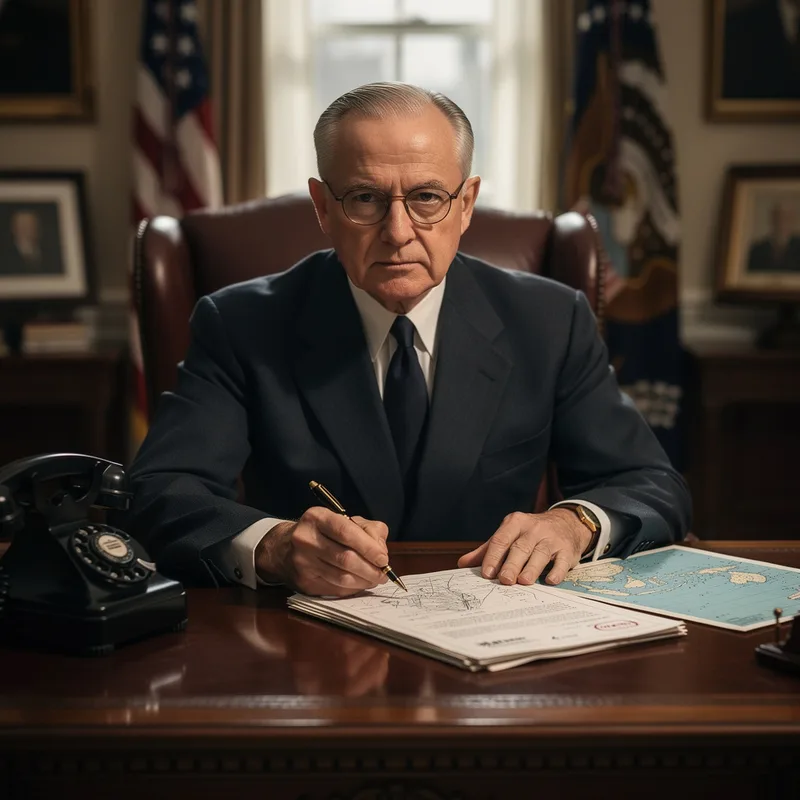
President Truman
 7
3.8
7
3.8

- proper noun
- /ˈprɛzɪdənt ˈtruːmən/
- In 1945, President Truman made the crucial decision to drop atomic bombs on Japan.
- President Truman announced
- 1948, President Truman
- 1950, President Truman
Examples
-
A strong labor-control bill, the Taft-Hartley Act, was passed by Congress in 1947 over the veto of President Truman.
Academic text (1990) -
"Everyone else in the executive branch," as President Truman once put it, "is an agent of the president."
Academic text (1999) -
In 1946, for example, President Truman held a ceremony to honor Japanese American soldiers.
Academic text (1995) -
As the 1948 campaign approached, President Truman was seen as critically weak.
Academic text (1992) -
On that day, President Truman announced the directive to continue US work on the superbomb.
Academic text (1996) -
On 27 June 1950, President Truman announced: "I have ordered the Seventh Fleet to prevent any attack on Formosa."
Academic text (1999) -
Alarmed by the possible rapid spread of Communism in Asia, President Truman reversed his neutral stand.
Academic text (1997) -
President Truman did not wish to be involved with Chiang Kai-shek's civil war or his retreat to Taiwan.
Academic text (2002) -
In Youngstown, the Court held unconstitutional President Truman's action to take possession of the country's steel mills during the Korean War.
Academic text (2018) -
In light of the truculent determination of the Japanese War Cabinet to continue fighting, President Truman was confronted with a choice between undertaking an invasion of the Japanese mainland and dropping the atomic bombs.
Academic text (2018)
Synonyms
 553
3.9
553
3.9
The 33rd president of the United States who led the country at World War II's end and ordered atomic bombs
 11
4.7
11
4.7
The 33rd President of the United States from 1945 to 1953 who allows the use of atomic bombs on Japan
 1
4.6
1
4.6
The 33rd United States President who led the country after World War II and started the Cold War
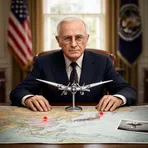
The 33rd President of the United States who led after World War II and used atomic bombs on Japan
Surface Forms
Morphology
This is a straightforward composition of a title ('President') and a proper name ('Truman'); a B1 learner who knows both constituents will readily infer it refers to the person named Truman who held the office of president. Title+name constructions are regular and cross-linguistically common, so the meaning is directly derivable from the parts.
Etymology
President Truman is the name of Harry S. Truman, who became the 33rd US President after Franklin D. Roosevelt died and had to make very hard choices at the end of World War II, including ordering the first atomic bombs. So, President Truman often brings to mind a leader who faced sudden, world-changing decisions.