

Harry S Truman
- proper noun
- /ˈhæri ɛs ˈtruːmən/
- Harry S Truman became President after Franklin D. Roosevelt's death in 1945.
Examples
-
The decision to drop atomic bombs on Japan was made by Harry S Truman.
-
Harry S Truman served as President during the critical transition from World War II to the Cold War.
-
Many historians debate Harry S Truman's foreign policy in the early years of the Cold War.
-
The decisions made by Harry S Truman changed the course of history.
-
Harry S Truman was known for his straightforward leadership style.
-
During his presidency, Harry S Truman implemented the Marshall Plan to aid European recovery.
-
Harry S Truman played a significant role in establishing the United Nations after World War II.
Synonyms
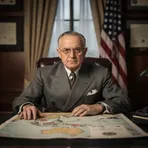
 553
3.9
553
3.9

The 33rd president of the United States who led the country at World War II's end and ordered atomic bombs
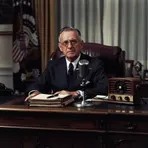 11
4.7
11
4.7
The 33rd President of the United States from 1945 to 1953 who allows the use of atomic bombs on Japan
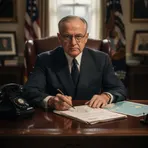 7
3.8
7
3.8
Leader of the United States from 1945 to 1953 who ordered atomic bombs to be dropped on Japan
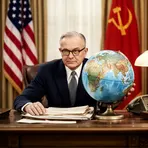 1
4.6
1
4.6
The 33rd United States President who led the country after World War II and started the Cold War
Surface Forms
Morphology
Harry + S + Truman
This is a lexicalized proper name referring to a specific historical person; knowing the constituent tokens 'Harry', 'S', and 'Truman' does not allow a B1 learner to infer the biographical meaning (33rd U.S. President who authorized atomic bombs). Proper names are arbitrary and encyclopedic rather than compositional, so the MWE's meaning is opaque without prior cultural or factual knowledge.
Etymology
Harry S Truman comes from his middle initial S, which did not stand for a single name but was used to honor both his grandfathers, so he was often written with just S. He became the 33rd President of the United States and is remembered for major decisions at the end of World War II.