
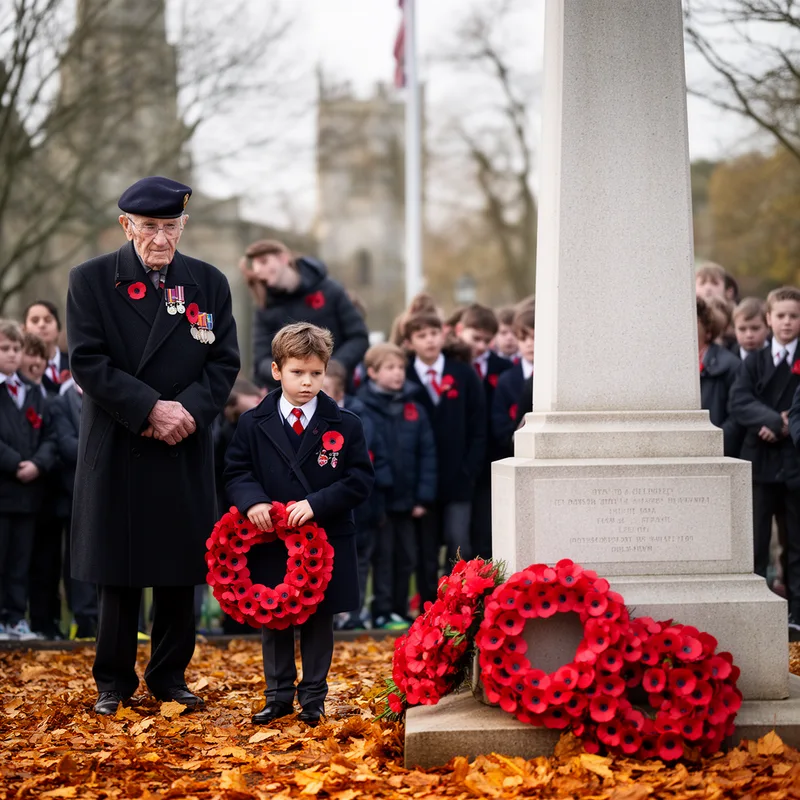
Poppy Day
- noun
- UK
- The two-minute silence on Poppy Day is observed across the country.
Examples
-
Many people wear red poppies on Poppy Day to honor fallen soldiers.
-
We celebrate Poppy Day every year.
-
Schools often hold special assemblies on Poppy Day to teach children about its significance.
-
On Poppy Day, we remember the fallen soldiers.
-
The Sunday nearest to November 11 is known as Poppy Day, when we honor those who died in the world wars.
-
On Poppy Day, people wear red poppies to remember the soldiers who sacrificed their lives.
-
Many ceremonies are held on Poppy Day to commemorate the brave men and women of the armed forces.
Synonyms
 1
3.2
1
3.2

A day near November 11 when people remember soldiers who died in war

Sunday closest to November 11 when people in the UK and some other countries remember those who died in wars
Surface Forms
Morphology
A B1 learner who knows 'poppy' (a flower) and 'day' (a calendar day) will likely infer that this is a day associated with poppies, but they will not reliably deduce the specific meaning of a national remembrance day for those who died in the World Wars. The connection between poppies and war commemoration is culturally specific and requires background knowledge, so the expression is only partially compositional.
Etymology
Poppy Day comes from a strong image after World War I: bright red poppy flowers grew on battlefields and near soldiers' graves, and a famous poem linked the flower to the dead. Because of that image, people began wearing a red poppy on Poppy Day 'to remember' and 'honor' those who died.