

Polypodium scouleri
- noun
- Specialized
- The tough, leathery leaves make Polypodium scouleri well adapted to its harsh environment.
Examples
-
Polypodium scouleri is commonly found growing on coastal rocks and cliffs in California.
-
Botanists often study Polypodium scouleri to understand plant adaptation to saline conditions.
-
The Polypodium scouleri is often found in moist, shaded areas.
-
Gardeners appreciate Polypodium scouleri for its unique appearance.
-
Polypodium scouleri thrives in coastal regions thanks to its ability to withstand salty air and rocky soil.
-
In the Pacific Northwest, Polypodium scouleri adds beauty to shaded gardens with its leathery fronds.
-
Polypodium scouleri can often be seen clinging to cliffs, demonstrating its resilience in rugged landscapes.
Synonyms

A fern with stiff leathery leaves that grows on rocky coasts
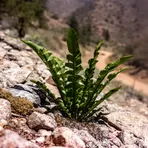
A stiff fern with thick leaves split near the middle that grows on dry rocky ground in western North America
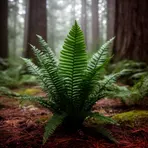
A fern with thick tough leaves and divided fronds that grows in western North American forests
Surface Forms
Morphology
Polypodium + scouleri
The form is a Latin binomial (genus + species), so a learner who knows 'Polypodium' as a type of fern can infer this refers to a particular species of that fern. However, 'scouleri' is a non-lexical species epithet (a proper name) that does not convey descriptive meaning, so the specific properties of the species are not predictable from the parts.
Etymology
Polypodium scouleri gets its name from an old Greek word plus a scientist's name. The word Polypodium means 'many feet' and gives the image of many small root-like parts that help the fern hold on to rocks, and scouleri honors the naturalist John Scouler who first collected the plant, so the name both describes how the fern grows and remembers who found it.

