
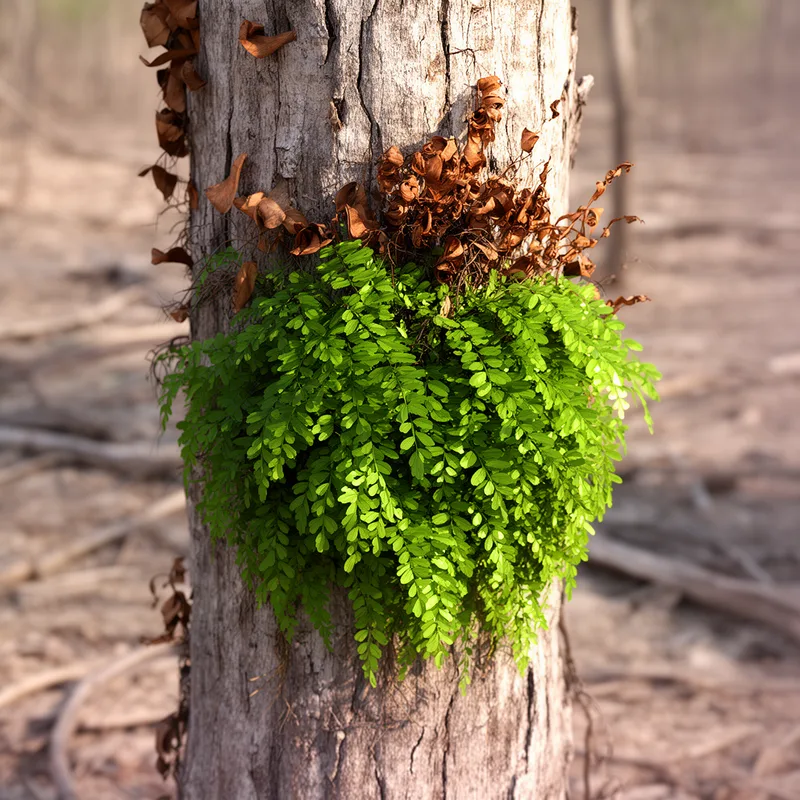
Polypodium polypodioides
- noun
- Specialized
- In its natural habitat, Polypodium polypodioides grows directly on tree trunks and rocks.
Examples
-
The distinctive greyish and scurfy underside of Polypodium polypodioides makes it easy to identify in the wild.
-
The Polypodium polypodioides fern is notable for its ability to survive long dry periods.
-
Gardeners often admire Polypodium polypodioides for its resilience and unique foliage.
-
The Polypodium polypodioides thrives in humid environments.
-
Did you see the Polypodium polypodioides growing on that tree?
-
Many tropical gardeners love to cultivate Polypodium polypodioides because it adds a unique texture to their landscapes.
-
In forests, Polypodium polypodioides often grows amid moss on damp rocks and tree bark.
Synonyms
A fern that grows on rocks or trees with grey rough undersides

A fern that grows on trees or rocks and appears dead when dry but comes back to life after rain
Surface Forms
Morphology
Polypodium + polypodioides
This is a botanical Latin binomial (a proper scientific name) composed of a genus and a species epithet; the species element polypodioides is not a normal English word and its morphological meaning is not accessible to a B1 learner. Even if the learner knows 'Polypodium' as a type of fern, they would not reliably infer the full encyclopedic sense (a particular fern species) from the parts without specialist botanical or Latin knowledge, so the expression is effectively idiomatic for general learners.
Etymology
Polypodium polypodioides is a plant name from old Greek that means 'many feet'. People who named plants used Polypodium because the fern has many thin, root-like parts that creep like little feet, and the second part polypodioides means 'like Polypodium', so the full name helps you remember this fern that clings to rocks and tree trunks and survives long dry periods.

