
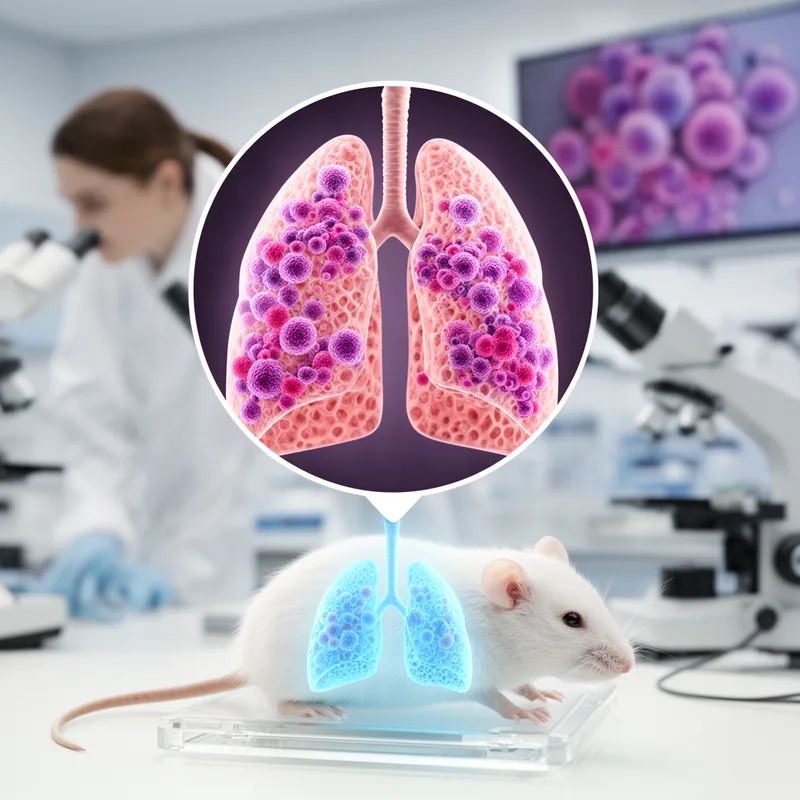
Pneumocystis carinii
- noun
- /ˌnjuːmoʊˈsɪstɪs kəˈrɪniː/
- Specialized
- Researchers study Pneumocystis carinii to understand lung infections.
Examples
-
Researchers observed how Pneumocystis carinii affects lung tissue under different laboratory conditions.
-
The presence of Pneumocystis carinii in the lungs can lead to serious illness in immunocompromised rodents.
-
Scientists use Pneumocystis carinii in experiments to better understand respiratory infections in mammals.
-
The effects of Pneumocystis carinii on respiratory health are significant.
-
Scientists use Pneumocystis carinii in experiments to better understand respiratory infections in mammals.
-
The presence of Pneumocystis carinii in the lungs can lead to serious illness in immunocompromised rodents.
-
Researchers observed how Pneumocystis carinii affects lung tissue under different laboratory conditions.
Surface Forms
Morphology
Pneumocystis + carinii
This is a Latin binomial (genus + species) where both parts are formal taxonomic labels rather than common English words with transparent senses; 'Pneumocystis' and especially 'carinii' do not convey the specific meaning 'lung-infecting fungus used in research' to a B1 learner. Knowledge of the constituent labels or basic Latin morphemes is required to infer anything, so the meaning is not derivable from the parts for an average B1 learner.
Etymology
Pneumocystis carinii: The name comes from the parts pneumo ('lung') and cystis ('cyst' or 'small sac'), with carinii likely taken from the scientist Carini. That image of cysts in the lungs explains why this fungus is used in lab experiments on lung disease in 'rodents' and other animals.

