
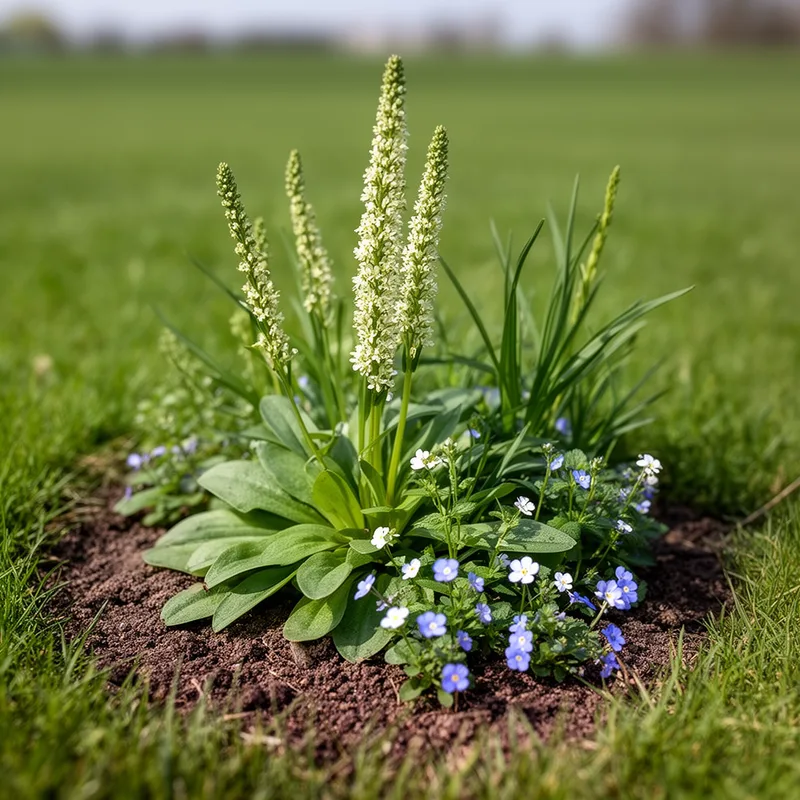
Plantaginaceae
- noun
- /plænˌtædʒɪˈneɪʃiˌi/
- Specialized
- Botanists have recently reclassified certain genera into the Plantaginaceae based on genetic studies.
Examples
-
The Plantaginaceae family includes several species commonly found in lawns and fields.
-
Many weeds in the Plantaginaceae are hardy and spread rapidly in disturbed soils.
-
The Plantaginaceae family includes various species of herbs.
-
Many Plantaginaceae are considered weeds in gardens.
-
Many weeds in the Plantaginaceae family are hardy and spread rapidly in disturbed soils.
-
The Plantaginaceae family includes several species commonly found in lawns and fields.
-
Many Plantaginaceae are considered weeds in gardens due to their fast growth.
Synonyms

A group of mostly small plants and a few shrubs, often including common lawn weeds
A group of flowering plants like plantains and their relatives
Surface Forms
Morphology
Etymology
Plantaginaceae comes from the plant name Plantago, English 'plantain', and the ending -aceae, which names plant families. Plantago comes from a Latin word meaning 'sole' because the leaves are flat like the bottom of a foot. So Plantaginaceae means the 'plantain family', which fits because it groups the small herbs and common weeds called plantains.

