
Plains Indian
 3
6.5
3
6.5

- noun
- /pleɪnz ˈɪndiən/
- An incident more germane to our focus on Plains Indian material culture.
- Plains Indian art
- Plains Indian trade
- Plains Indian music
Examples
-
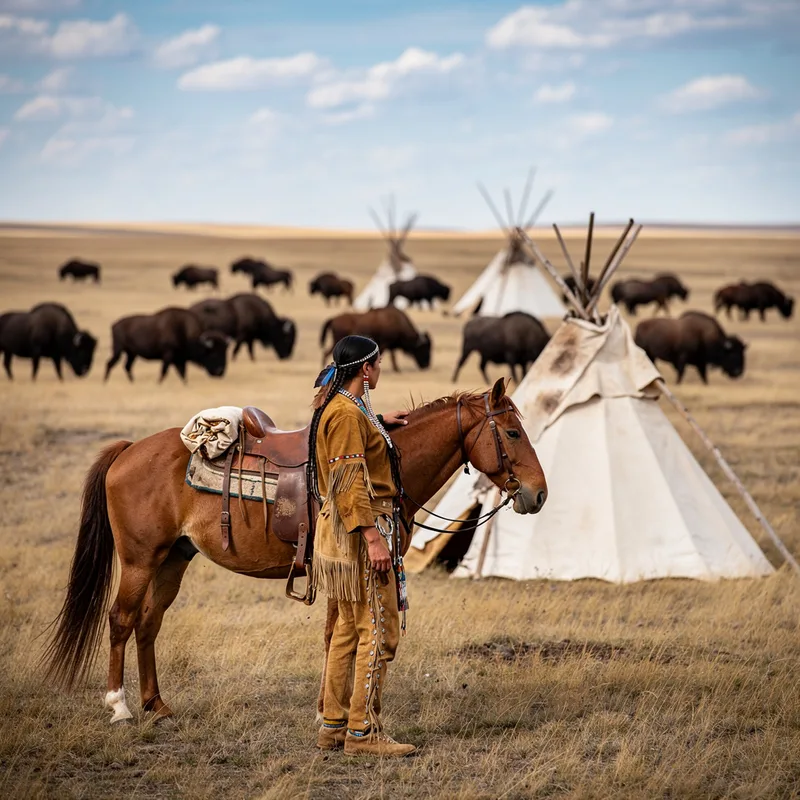
From then on, there were teepees made by the plains Indians.
Fiction book (1999) -
Most early collectors of Plains Indian art, however, were men.
Academic text (2002) -
A course in cultural traditions of the North American Plains Indians.
Fiction book (1993) -
"In the early 20th century, people thought that all Indians looked like Plains Indians," Pulsipher says.
Blog text (10) -
The rites for the dead were carried out in a manner reminiscent of the Plains Indians of North America.
Fiction book (1991) -
Regardless of what method was used by the Indians, it's a matter of record that news of the whiskey train became common knowledge within 48 hours to every tribe of every North American Plains Indian.
-
When viewed in a broader historical context, it reveals much about the ongoing process through which Plains Indians reinterpreted the flag.
Academic text (2002) -
Both Boas and Benedict looked to Deloria to teach them, beyond assuming the informant role, about Plains Indian culture, languages, and communities.
Academic text (2018) -
The Plains Indian tribes traditionally depended on the buffalo for food and shelter.
-
Many Plains Indians are known for their rich cultural heritage and vibrant storytelling.
Synonyms
 161
3.4
161
3.4
A person whose family lived in North or South America before Europeans arrived
 3
5.6
3
5.6
A man who belongs to a group with the same culture and way of life
 2
7.6
2
7.6
A member of the first people who lived in a region

 1
9.4
1
9.4
A person native to a place where their family lived for many generations
 1
5.9
1
5.9
A woman who belongs to a traditional local community
A person who lives in a small community that shares the same customs
Surface Forms
Morphology
The compound labels a person by region and identity: 'Plains' (open level lands/the Great Plains) combined with 'Indian' (an indigenous American person) yields a person from the Plains. This geographic + demonym composition is straightforward and cross-linguistically common, so a B1 learner who knows the parts can infer the meaning.
Etymology
Plains Indian names people who lived on the wide grasslands called the Great Plains. The parts Plains (the place) and Indian (the old word used for the native people) give the image of groups who often moved to 'follow' buffalo herds, so the phrase means a member of those people.