
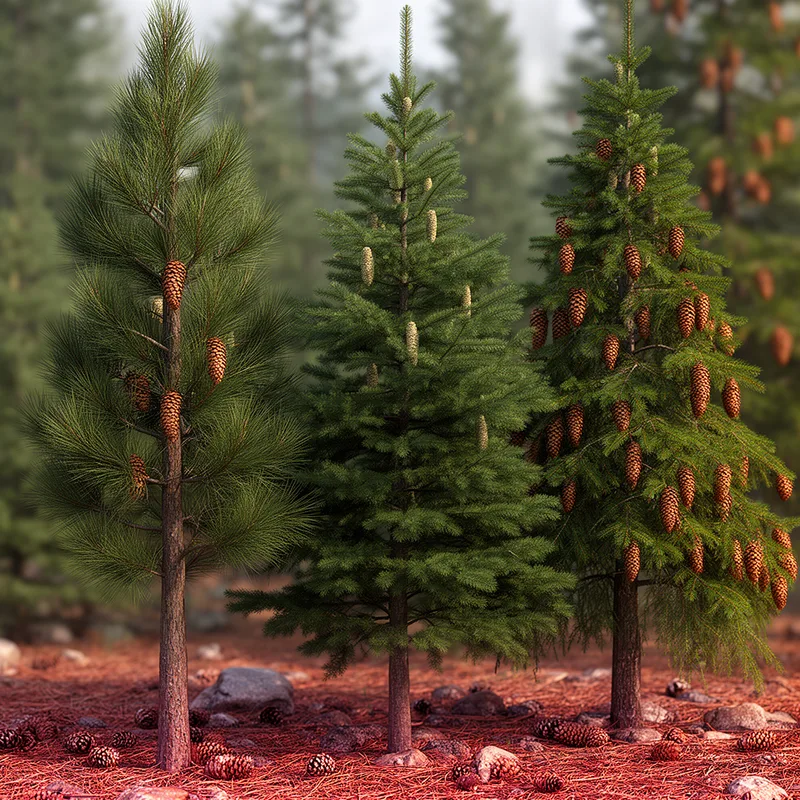
Pinophytina
- noun
- /ˌpɪnoʊˈfaɪtɪnə/
- Specialized
- The majority of living coniferous plants belong to the group known as Pinophytina.
Examples
-
Much of the world's timber comes from species classified within Pinophytina.
-
Botanists debate whether Pinophytina should be considered a class or a subdivision.
-
The Pinophytina group includes many familiar trees.
-
Are Pinophytinas the most diverse group of plants?
-
Much of the world's timber comes from species classified within Pinophytina.
-
The majority of living coniferous plants belong to the group known as Pinophytina.
-
Botanists debate whether Pinophytina should be considered a class or a subdivision.
Synonyms

A group of trees that make cones, like pines and firs
A group of cone-bearing plants like pines and firs
A group of plants that make cones, like pines and spruces
Surface Forms
Morphology
Pinophytina = Pinophyta (opaque) = pinophyta + ina
The term is a technical taxonomic formation (Pinophyta + -ina) using combining forms unfamiliar to average learners, so the meaning is not derivable from familiar English roots.
Etymology
Pinophytina comes from the Latin pinus 'pine' and the Greek phyton 'plant', and the ending -ina shows it is a group. So it literally means 'pine plants', which is why it names the group of trees that make cones, like pines, firs, and spruces.

