
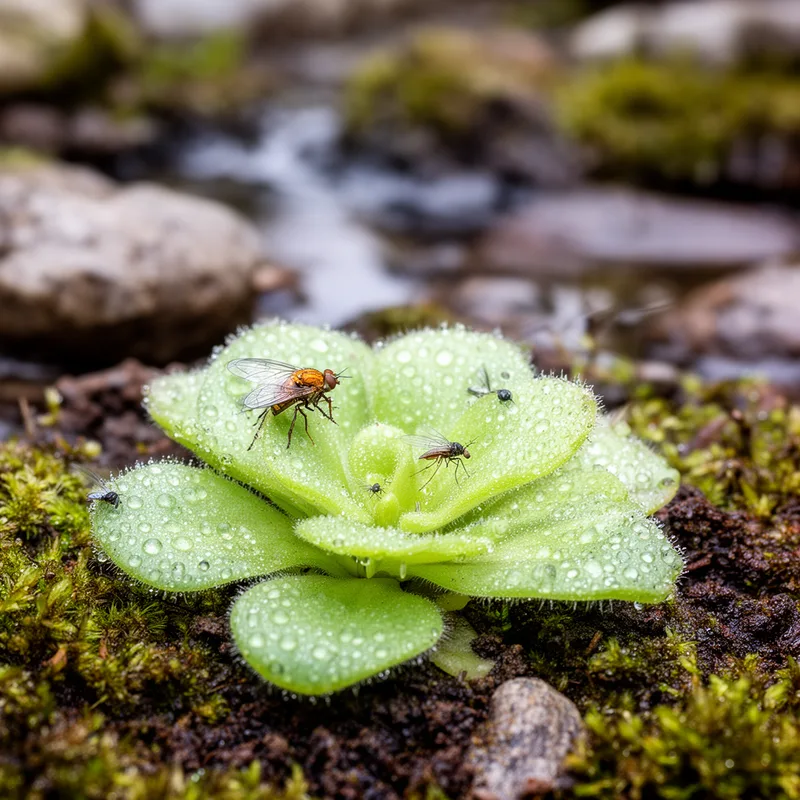
Pinguicula
- noun
- /ˌpɪŋˈɡwɪk.jʊ.lə/
- Specialized
- In the damp corner of the greenhouse, several pinguicula plants thrived, their sticky leaves ready to catch unsuspecting insects.
Examples
-
It was mid-January, the height of summer, and the crevasses between the patches of broken rock were mortared with tiny pinguicula flowers.
Fiction book (2001) -
During our hike, we spotted pinguicula growing near the bog, their unique appearance distinguishing them from the surrounding foliage.
-
As she peers into the mirror, she discovers a pinguicula, a buttery opalescent triangle on the white of her eye.
Fiction book (1997) -
The garden was adorned with vibrant pinguicula flowers, attracting curious bees with their sweet scent.
Synonyms

A group of small plants that grow in bogs and eat insects using sticky leaves
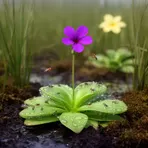
A plant in wet places with sticky leaves that catch insects
Compounds
- Specialized
A group of small plants that grow in bogs and eat insects using sticky leaves
Surface Forms
Etymology
Pinguicula comes from the Latin root pinguis meaning 'fat' or 'greasy' plus the small ending -cula, so it literally means 'little greasy one'. This is a helpful memory hook because these 'butterwort' plants have shiny, sticky leaves that look a bit greasy and help them trap insects.

