
Pictish
 1
9.9

- adjective
- /ˈpɪktɪʃ/
- The fascinating history of the Pictish people reveals much about early Scottish culture.
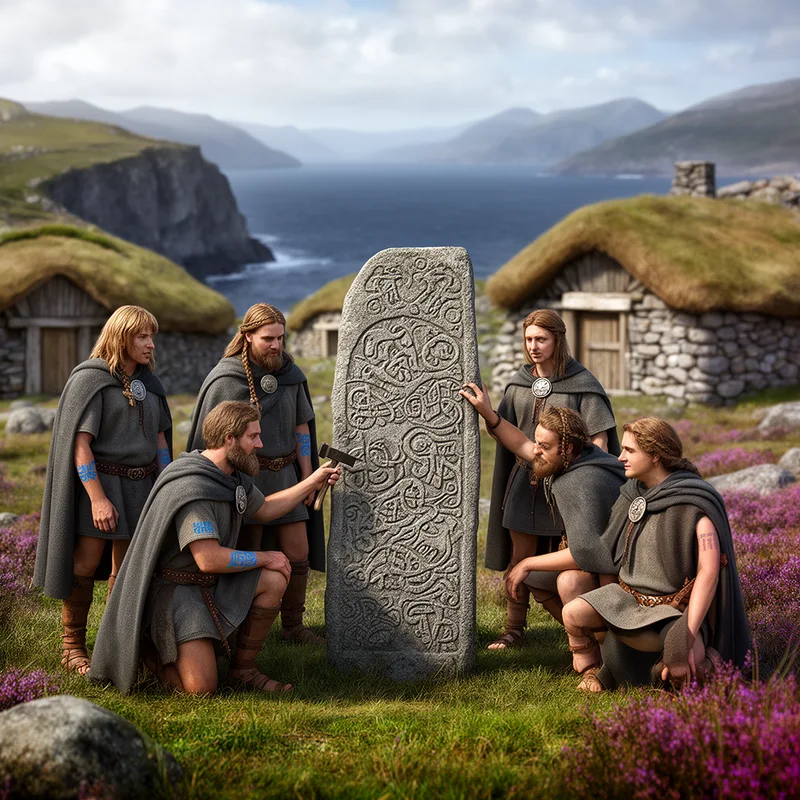
- Pictish sculpture
- Pictish monumental stones
Examples
-
Near a crossroads marked with a Pictish cross, Dougal abruptly reined to a halt.
Fiction book (1991) -
Over the past hundred years, archaeological investigations in various parts of Scotland have produced 150 significant pieces of Pictish sculpture—almost a third.
Academic text (2004) -
But Pictish sculpture was unique in many ways.
Academic text (2004) -
Prior to the sixth century, the Pictish system seems not to have existed.
Academic text (2004) -
Only the Pictish script continues to defy scholarly investigation.
Academic text (2004) -
It looks a lot like the patterns on those Pictish stones outside Clava.
Fiction book (1992) -
I was sorry not to see Antonine's Wall, for it ran from the mouth of the Clyde east to the sea as a barrier to keep Pictish wolves from Roman sheepfolds.
Fiction book (1991) -
I wondered if anyone had marked our passage and whether word would drift back to Uther or the druids that a tall Pictish boy was in Myrddin's company.
Fiction book (1991) -
Despite exhaustive efforts over many decades, scholars have utterly failed to fully understand the enigmatic script engraved on three hundred Pictish monumental stones scattered across northern Scotland.
Academic text (2004) -
The new research carried out by the Hendersons and other art historians is revealing that Pictish sculptures have their own originality, and indeed, that some are, in fact, complex theological arguments engraved in stone.
Academic text (2004)
Surface Forms
Morphology
Etymology
Pictish comes from the Latin name Picti, which meant 'painted ones' because Roman writers said these people painted or tattooed their bodies; think of the English words paint and picture. So, Pictish describes things that belong to those ancient people, like their art and culture.