
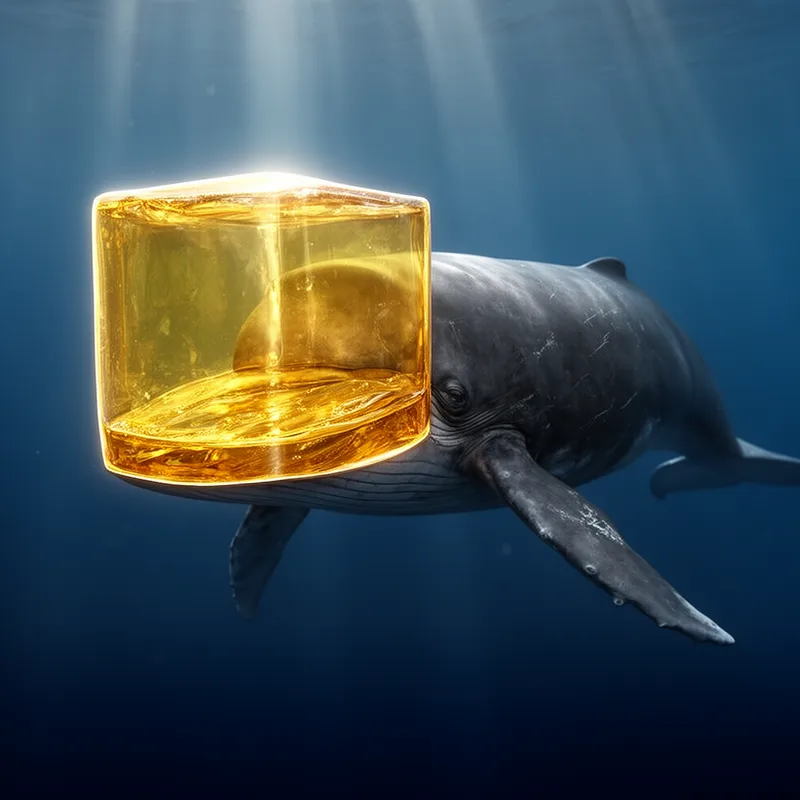
Physeter catodon
- noun
- /faɪˈsiːtər kætəˈdɒn/
- Specialized
- The Physeter catodon is the largest toothed whale.
Examples
-
The Physeter catodon can dive more than 1,000 meters in search of squid.
-
Scientists have studied the oil found in the head of Physeter catodon for years.
-
Ambergris, highly valued in perfumery, comes from the digestive system of Physeter catodon.
-
Many people are fascinated by the Physeter catodon.
-
The Physeter catodon, known for its massive size, can be found in all oceans around the world.
-
Researchers have discovered that the Physeter catodon uses echolocation to find its prey deep in the ocean.
-
Fishermen often encounter the Physeter catodon while hunting for squid, as this whale dives to significant depths.
Synonyms
 4
3.7
4
3.7

A very large whale with a huge head and big teeth that lives in deep oceans
A very large whale with a big head that contains waxy oil and sometimes produces ambergris

A very large whale with a big head that dives deep to eat squid

A very large whale like the sperm whale that has oil and ambergris in its head
Surface Forms
Morphology
Physeter + catodon
This is a Latin binomial (genus + species): the element 'Physeter' directly signals a whale genus so a learner who knows that constituent could infer it names a kind of whale. However, taxonomic epithets like 'catodon' are lexicalized, language-specific labels and do not transparently convey the specific meaning 'sperm whale' or its distinctive properties to an average B1 learner, so full understanding requires specialist knowledge.
Etymology
Physeter catodon may come from old words meaning Physeter 'to blow' and catodon 'big tooth'. That image of a whale that 'blows' a strong spout and has large teeth fits the sperm whale, a big-headed whale known for the oil in its head and for ambergris.