
Phylloxera
- noun
- /fɪˈlɒksərə/
- Specialized
- After a phylloxera infestation in the late nineteenth century, growers planted phylloxera-resistant American and hybrid vines abundantly in many parts of France (Garrier 1989).
Examples
-
The discovery of phylloxera in the vineyards led to significant changes in wine production practices.
-
Due to the epidemic of phylloxera in French and Italian vineyards in 1858, Hvar's wine had a brief interval of good placement on the European market.
Academic text (1993) -
In addition, in the late 19th century, phylloxera nearly destroyed the wine business in Cahors.
Blog text (14) -
The second period, since the mid-1970s, has marked the most significant alteration of French vineyard composition since the replantings after the phylloxera scourge of the late nineteenth century.
Academic text (1993) -
After a phylloxera infestation in the late nineteenth century, growers planted phylloxera-resistant American and hybrid vines abundantly in many parts of France (Garrier 1989).
Academic text (1993) -
In the late 19th century, the spread of phylloxera devastated many vineyards across Europe.
-
Farmers in Bordeaux struggled to combat the phylloxera infestation that ruined their grape harvests.
Compounds
- Specialized
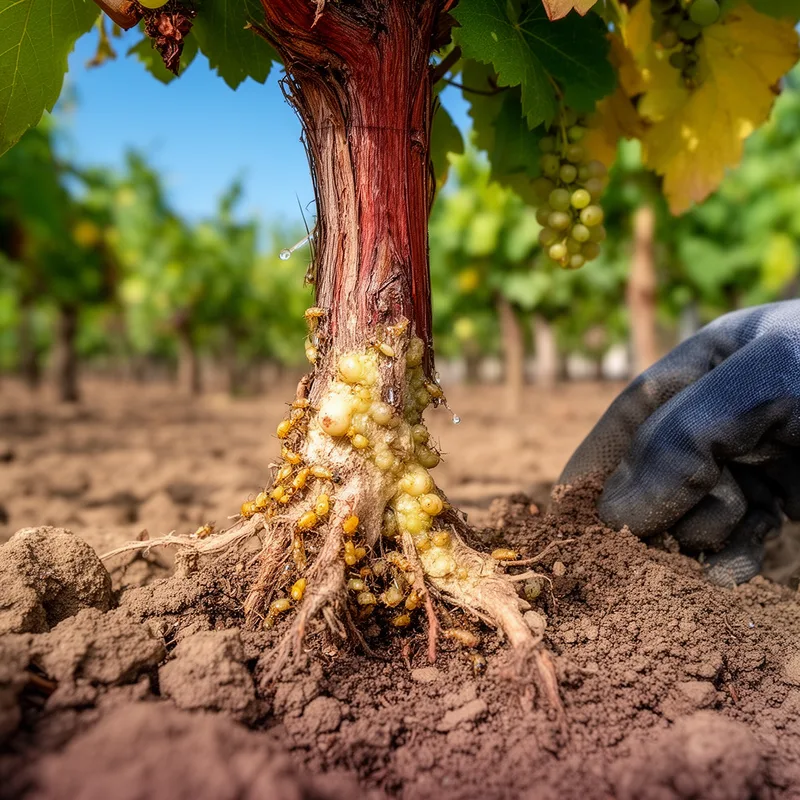
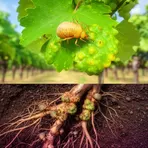
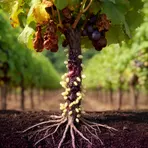
A small insect that sucks sap from grapevines and damages their roots and leaves
Surface Forms
Etymology
Phylloxera comes from Greek parts phyllo- meaning 'leaf' and -xera meaning 'dry' or 'wither'. A helpful way to remember the word is that these tiny sap-sucking insects damage grape leaves and roots, which is why Phylloxera is a pest of vineyards.

