

Phylloscopus
- noun
- /ˌfɪləsˈkoʊpəs/
- Specialized
- The Phylloscopus genus includes various species of leaf warblers found in forests and grasslands.
Examples
-
(d) Willow warblers (Phylloscopus trochilus) have increased in abundance from 1994 to 2003 in Scotland, while declining throughout much of Wales and England.
Academic text (2007) -
The distinctive songs of Phylloscopus warblers can often be heard in the early morning hours in Eurasia.
-
Many birdwatchers enjoy observing the different Phylloscopus species during migrations in the spring.
Synonyms
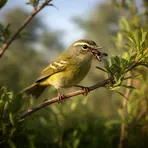
Small birds that eat insects and live in Eurasia and Africa
Compounds

- Specialized
A small European woodland bird with pale yellow feathers and a sweet song
Surface Forms
Morphology
Phylloscopus = phyllo + scopus
The name is a Latin/Greek compound used as a scientific genus ('leaf' + ' watcher' historically), but its elements are not productive English morphemes and the meaning is only clear with specialist etymological knowledge.
Etymology
The word Phylloscopus comes from Greek parts phyllo- meaning 'leaf' and scopus meaning 'watcher', the same root you see in scope. So a Phylloscopus is a 'leaf-watcher' — a small bird that moves through leaves looking for insects, which explains the name.

