
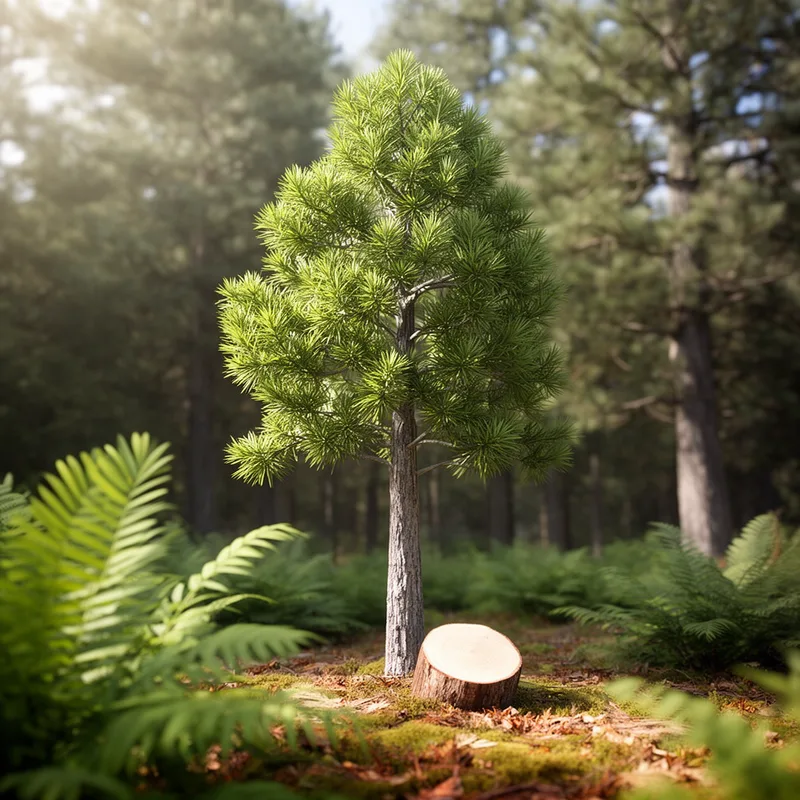
Phyllocladus trichomanoides
- noun
- Specialized
- The Phyllocladus trichomanoides, also known as the celery pine, thrives in New Zealand's unique climate.
Examples
-
The wood of Phyllocladus trichomanoides is valued for its durability and pale color.
-
The forest was dominated by Phyllocladus trichomanoides and other native conifers.
-
Botanists recorded several mature Phyllocladus trichomanoides in the protected reserve.
-
The Phyllocladus trichomanoides is commonly found in New Zealand.
-
Did you know the Phyllocladus trichomanoides can grow up to 20 meters tall?
-
In New Zealand, the Phyllocladus trichomanoides is a common sight in the dense forests.
-
Many visitors admire the beautiful Phyllocladus trichomanoides while exploring New Zealand's national parks.
Synonyms

A medium-tall New Zealand tree with slender branches and thin leaves like scales
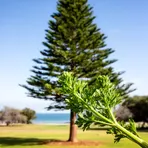
An evergreen tree from Australia with leaves that look like celery
Surface Forms
Morphology
Phyllocladus + trichomanoides
This is a scientific Latin binomial functioning as a proper name for a tree species, so its overall meaning ('a species of evergreen tree / celery pine') is an arbitrary label rather than a compositional phrase. One constituent ('trichomanoides') is not a known English word and even 'Phyllocladus' is a technical genus name, so a B1 learner who knows ordinary English words would not be able to derive the species meaning from the parts. Taxonomic naming is cross-linguistic but does not make the label transparently interpretable to general learners.
Etymology
Phyllocladus trichomanoides points to the tree's leaf-like branches: its flat stem pieces look a bit like celery, so people often call it the 'celery pine'. That's why the name refers to this particular New Zealand evergreen tree.

