
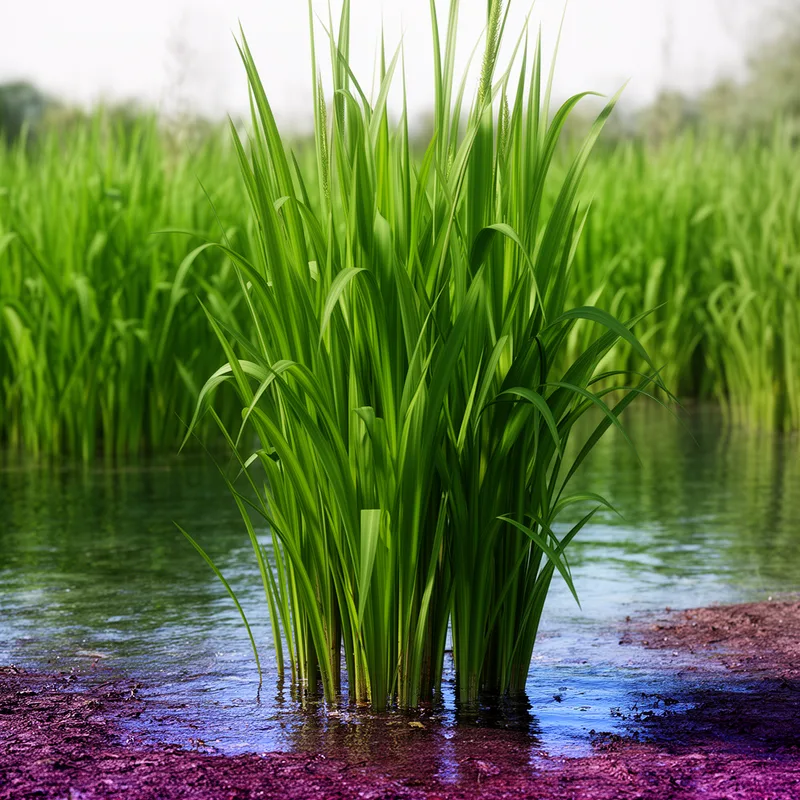
Phalaris arundinacea
- noun
- Specialized
- Many gardeners planted Phalaris arundinacea along the edge of their water features for erosion control.
Examples
-
Phalaris arundinacea can spread quickly and dominate wetland habitats if not managed.
-
Researchers studied the growth patterns of Phalaris arundinacea in marsh restoration projects.
-
The Phalaris arundinacea thrives in wetland areas.
-
Is Phalaris arundinacea native to North America?
-
Phalaris arundinacea is commonly found in wetlands and is known for its broad leaves.
-
In Europe, Phalaris arundinacea often grows alongside ditches and can be invasive.
-
Phalaris arundinacea provides habitat and erosion control in wetland ecosystems.
Synonyms

A tall grass that lives for many years and grows in wet places like riverbanks and ditches

A grass that lives for many years with broad striped leaves that grows in wet places like ponds and ditches

A grass with broad leaves that grows in wet meadows and ditches

A grass with broad leaves that grows for many years in marshy meadows and ditches
Surface Forms
Morphology
Phalaris + arundinacea
This is a Latin scientific binomial rather than a compositional English phrase: 'Phalaris' is a taxonomic name and 'arundinacea' is a Latin epithet (not an English word and absent from the learner dictionary). A B1 learner who knows the listed constituents would not be able to derive the species-level meaning without botanical or Latin knowledge, so the expression is not transparently interpretable.
Etymology
Phalaris arundinacea comes from Latin words that give a simple picture: Phalaris is the group name and arundinacea means 'reed-like'. The name describes a tall, reed-like grass that grows in wet places, so it fits the plant today.

