

Petromyzontidae
- noun
- /ˌpɛtrəˈmaɪzənˌtiːdeɪ/
- Specialized
- The Petromyzontidae are distinguished by their lack of jaws and paired fins.
Examples
-
The Petromyzontidae family includes various species of lampreys.
-
The river is home to several species within the Petromyzontidae family.
-
Scientists study Petromyzontidae to learn about early vertebrate evolution.
-
Many scientists study Petromyzontidae to understand their unique biology.
-
The Petromyzontidae family includes various species of lampreys that are known for their remarkable ability to attach to other fish.
-
Scientists study Petromyzontidae to understand their role in aquatic ecosystems and their historical significance in vertebrate evolution.
-
The river is home to several species within the Petromyzontidae family, which are often seen clinging to rocks and fish.
Synonyms
 5
9.0

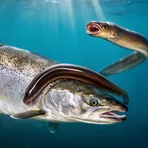
A thin eel-like fish with no jaws that attaches to other fish to feed

 1
8.3
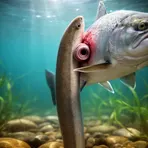
A long fish without jaws with a round mouth that sucks blood from fish in rivers or seas

A jawless eel-like fish that sticks to other fish using a round sucking mouth
Surface Forms
Etymology
Petromyzontidae comes from Greek parts meaning 'stone' and 'to suck': petro- 'stone', myzon 'to suck', plus the family ending -idae 'family'. So, Petromyzontidae are lampreys, jawless fish with a round, sucking mouth that often attaches to rocks or other fish.