
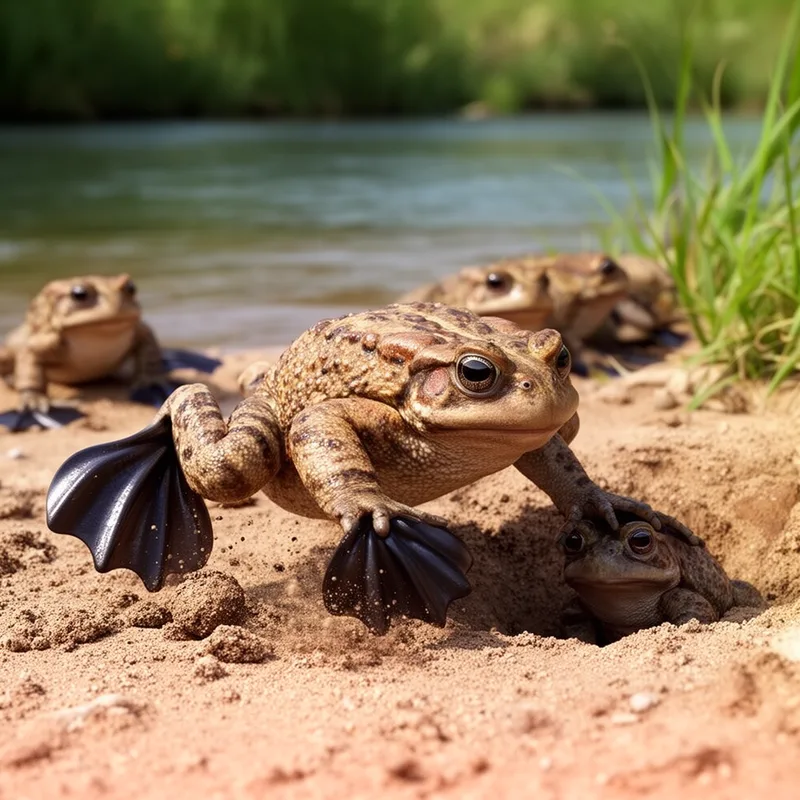
Pelobatidae
- noun
- /ˌpɛloʊˈbætɪˌdeɪ/
- Specialized
- Unlike most frogs, members of the Pelobatidae dig burrows using the spade-like structure on their feet.
Examples
-
The family Pelobatidae is distributed across parts of Europe, North Africa, and Western Asia.
-
The Pelobatidae family includes various species of burrowing toads.
-
Researchers found several species in the Pelobatidae family while conducting fieldwork near the river.
-
Have you ever seen a Pelobatidae in the wild?
-
The family Pelobatidae consists of unique toads that use their specialized feet to burrow underground.
-
Scientists study the Pelobatidae family to understand their adaptation to arid environments.
-
In the Pelobatidae group, the spade-like projections on the hind feet are crucial for digging in sandy soil.
Synonyms
A group of toads that dig in the ground and have spade-like back feet
Compounds
- Specialized
A group of toads that dig in the ground and have spade-like back feet
Surface Forms
Morphology
Pelobatidae = Pelobates (opaque) = Pelobates + idae
Formed by adding the taxonomic family suffix '-idae' to the genus name, but the family-forming suffix is specialised and not obvious to an average B1 learner.
Etymology
Pelobatidae comes from Greek parts pelos meaning 'mud' and bates meaning 'walker', and the ending -idae marks it as a family name. So it literally means 'mud-walkers', a useful image for these spadefoot toads that dig and live in muddy burrows.

