
Peking
 16
4.8
16
4.8

- proper noun
- /ˈpiːkɪŋ/
- Archaic
- The Communists then established the People's Republic of China (PRC) in Peking (Beijing) on 1 October 1949.
- Peking man
- Peking University
- fossils of Peking
Examples
-
In 1368, he took Peking and ascended to the throne as Emperor of all China.
Academic text (1996) -
We are pleased that Peking has sped up the pace of its economic reform and opening.
Academic text (1999) -
I shall start in Peking and move west..
-
We were supposed to go to Peking but it never seemed to work out.
-
On one of the wide streets of Peking, a fair was in progress.
Academic text (1995) -
So, I hear the Peking Opera is fantastic.
-
An old China hand, he remembers when this city was still called Peking, not that it made any difference.
Fiction book (2001) -
Imagine me a general, stationed in Peking, or perhaps even Moscow.
-
We attended a Peking Opera in Beijing as a culminating activity one evening.
Academic text (1992) -
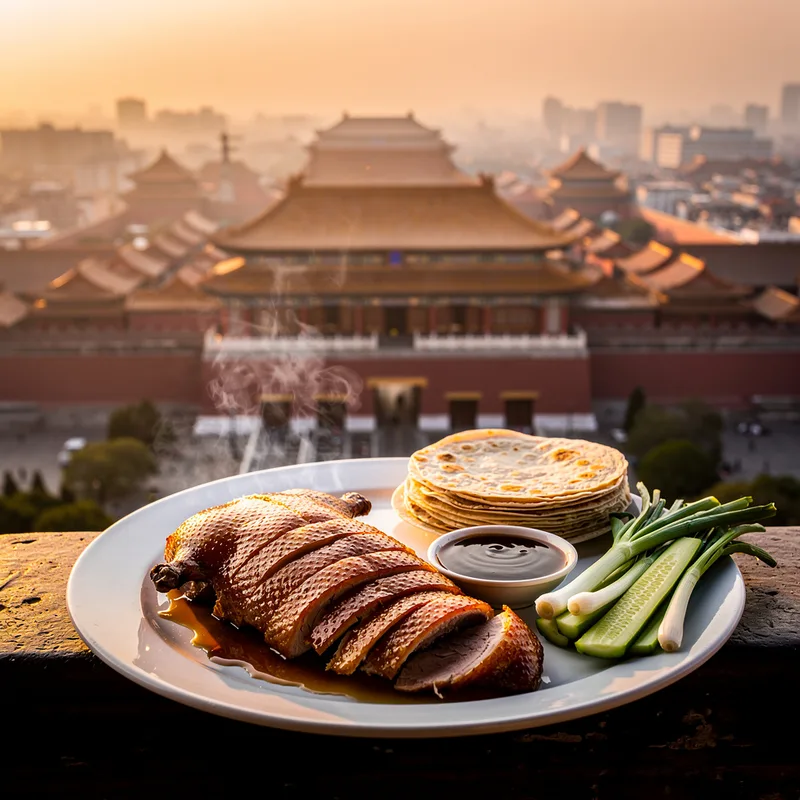
The most celebrated Chinese dish is Peking duck, known for its crispy skin.
Synonyms
 192
1.0
192
1.0
The capital city of China in the northeast of the country

Old name for Beijing, the capital of China, used before 1949
Compounds

Surface Forms
Etymology
Peking is the older English name for Beijing. The Chinese parts bei 'north' and jing 'capital' show it means 'northern capital', which helps explain the city's name today.