
Parthian
 1
9.9

- noun
- /ˈpɑrθiən/
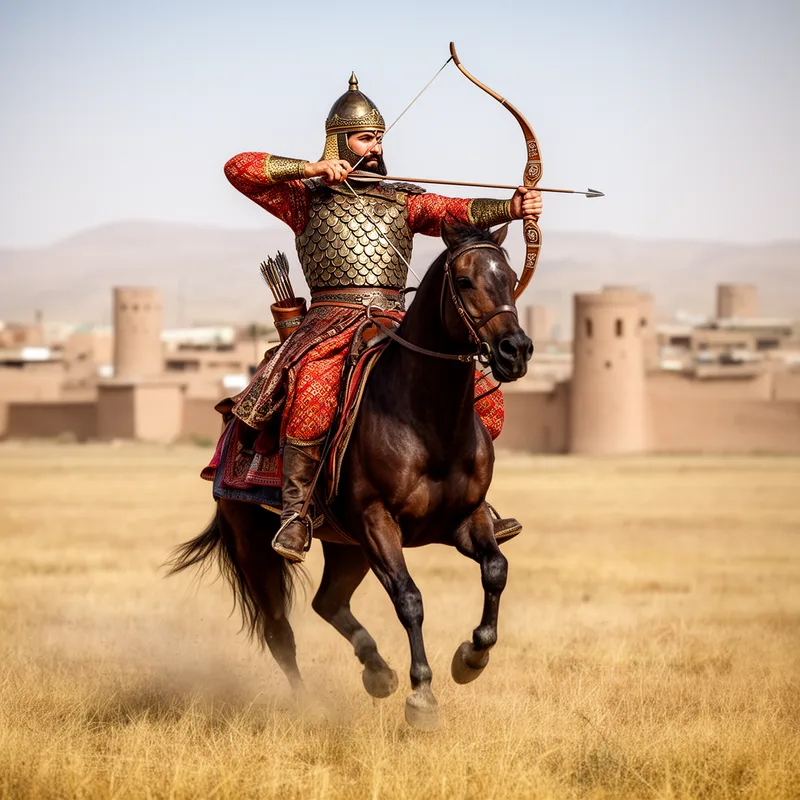
- During the empire's peak, many Parthians were skilled horsemen and archers.
- the Parthians and the Romans
Examples
-
The bearded Parthian is returning the Roman standard.
-
By his time, the Roman army's principal weapon had become heavy cavalry styled after the Parthians, as Rome's principal military threat was the Parthian Kingdom.
Blog text (19) -
However, this fealty would not last for long as the Parthian soon broke free and started growing once more.
-
The Romans trusted him to prevent invasion from the Parthians.
-
It turns out that the Parthians had brought a lot of arrows.
-
Supply, however, lagged far behind demand, since the flow of silk was controlled and heavily taxed by the Parthian Empire.
-
The Medes occupied the west, the Persians established themselves in the south, and the Parthians settled in the northeast.
Academic text (2007) -
The Achaemenids situated their administrative center in lower Mesopotamia, as did the Parthians and Sasanids who followed them.
Academic text (2007) -
But with only brief exceptions, the Romans were content with only part of this lucrative and fertile area, leaving the rest to the Parthian and later Persian empires.
-
The Parthians, at Carrhae, attrited the Roman units with arrow barrages to the extent that they lost cohesion.
Academic text (1999)
Compounds
Surface Forms
Morphology
Etymology
Parthian comes from the place name Parthia, an ancient region in what is now northeastern Iran, and from old Persian Parthava meaning 'land of the Parthians'. So a Parthian is a person who comes from that land.