

Parthenium hysterophorus
- noun
- /ˌpɑrˈθiːniəm hɪstəˈrɒfərəs/
- Specialized
- The government launched a campaign to control Parthenium hysterophorus due to its harmful effects on crops and livestock.
Examples
-
Parthenium hysterophorus has become a major invasive weed in parts of Asia and Africa.
-
Farmers are concerned about the rapid spread of Parthenium hysterophorus in their fields.
-
The Parthenium hysterophorus is a common weed in tropical regions.
-
Farmers are concerned about the spread of Parthenium hysterophorus.
-
Parthenium hysterophorus is often found growing in disturbed areas, making it a troublesome invasive species.
-
Many agricultural experts warn that Parthenium hysterophorus can outcompete native plants in ecosystems.
-
The white flowers of Parthenium hysterophorus can be seen blooming in various regions around the world.
Synonyms
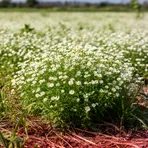
A small tropical American weed with white daisy-like flowers that grows quickly
Surface Forms
Morphology
Parthenium + hysterophorus
This is a scientific Latin binomial (taxonomic) name rather than a compositional English phrase; its meaning 'a particular invasive weed species' is a conventional label and not derived from the literal meanings of the parts. The second element 'hysterophorus' is not a standard English word and even knowing 'Parthenium' as a genus would not allow a B1 learner to infer the full sense (tropical annual invasive weed). Such technical names are language-specific labels and therefore opaque to learners.
Etymology
Parthenium hysterophorus is the name of a small plant with white flowers and many tiny seeds. Those seeds blow in the wind and stick to animals and clothes, so the plant quickly fills fields, and the name is now used for a 'invasive weed'.

