

Parkinson's disease
 19
3.1
19
3.1

- noun
- /ˈpɑrkɪnzənz dɪˈziːz/
- Specialized
- Many patients with Parkinson's disease experience muscle stiffness and slow movement.
- Parkinson's disease patients
- people with Parkinson's disease
- individuals with Parkinson's disease
Examples
-
His symptoms of Parkinson's disease include tremors and difficulty walking.
-
Reductions in dopamine have been associated with Parkinson's disease, which occurs when brain cells that produce dopamine are destroyed.
Academic text (1996) -
Do you ever get scared that you could have Parkinson's disease?
-
The second user trials were carried out in the United Kingdom with seven patients with Parkinson's disease.
Academic text (2000) -
They found out I have, uh, Parkinson's disease.
-
The main aim of the trial was to assess the potential use of the PAM-AID with Parkinson's disease patients.
Academic text (2000) -
Issues about how to effectively deliver palliative care for people with advanced Parkinson's disease warrant further investigation.
Academic text (2010) -
Evidence suggests that the needs of caregivers of patients with Parkinson's disease at the end of life are poorly documented.
Academic text (2010) -
Consequently, all former carers indicated the need for adequately trained staff to care for Parkinson's disease patients.
Academic text (2010) -
Considerable research has documented caregiver burden in Parkinson's disease, including depression, stress, strain, fatigue, and mortality.
Academic text (2010)
Synonyms
 1
7.7
1
7.7
A brain problem that causes shaking, stiff muscles, and slow movement
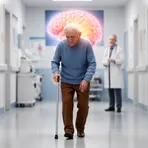
A long-term brain disease that causes shaking, stiff muscles and slow movement
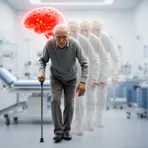
A brain disease that gets worse and causes tremors, stiffness, and slow movement

A long-term brain illness that causes shaking and stiff muscles

A brain disease that causes shaking, stiff muscles, and slow movement
Surface Forms
Morphology
Knowing 'disease' lets a B1 learner infer that this is some medical condition, but the proper-name element 'Parkinson's' does not reveal the specific symptoms (tremors, rigidity, movement disorder). Because the phrase is compositional only at the general level (a disease) but requires prior exposure or medical knowledge to get the full, specific meaning, it is best classified as semi-transparent.
Etymology
Parkinson's disease is named after a doctor, James Parkinson, who first wrote about people with strong 'shaking' and slow movement. That's why the name now means the illness with 'tremors', stiff muscles and trouble moving.