
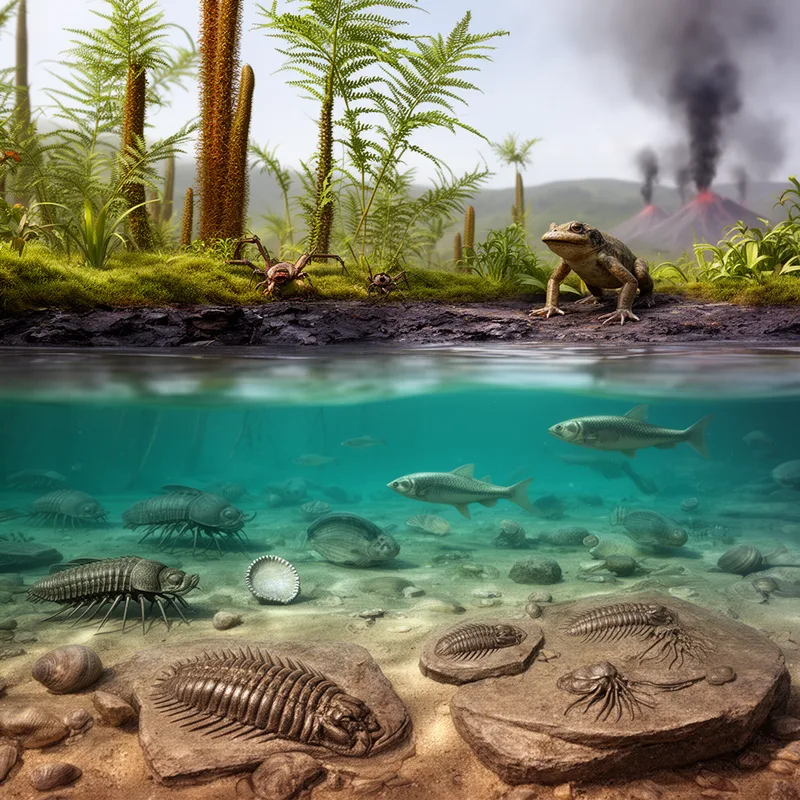
Paleozoic


 1
9.9
1
9.9
- noun
- /ˌpeɪliəˈzoʊɪk/
- Specialized
- Many species, including early plants and fish, thrived during the Paleozoic period.
- Paleozoic time
Examples
-
If you pull anything bigger than my hand out of this creek or any other body of water here in the Paleozoic, I'll eat it." "Good!
Fiction book (2002) -
"Isn't screening supposed to keep lunatics out of Paleozoic time?"
Fiction book (2002) -
By the end of the Paleozoic, the land and the seas are bursting with life.
-
It was one of the biggest land animals she had seen since her arrival in Paleozoic time—as long as her forearm, as big around as her finger.
Fiction book (2000) -
In the Late Paleozoic, 360 to 250 million years ago, acid magma rose from great depths in the earth and intruded into older rocks (Gung 2012).
Academic text (2016) -
Without the occasional preservation of soft parts, including muscles, limbs, antennae, stomachs, and even remnants of meals, many of the unusual animals of the early Paleozoic that lacked hard shells would be completely unknown.
Academic text (1992) -
The study of fossils from the Paleozoic era reveals the first signs of complex life on Earth.
-
Geologists have identified key rock layers that formed during the Paleozoic era, which help us understand ancient ecosystems.
Synonyms

A long time in Earth's past when many new animals and plants first appear
Compounds
- Specialized
A long time in Earth's past when many new animals and plants first appear
Surface Forms
Morphology
Etymology
Paleozoic comes from Greek parts paleo- ('old') and -zoic ('life'), and the 'zo-' part is the same you find in zoo and zoology for animals. So it literally means 'old life', which is why we use it for the long era when the earliest major plants and animals appeared.