
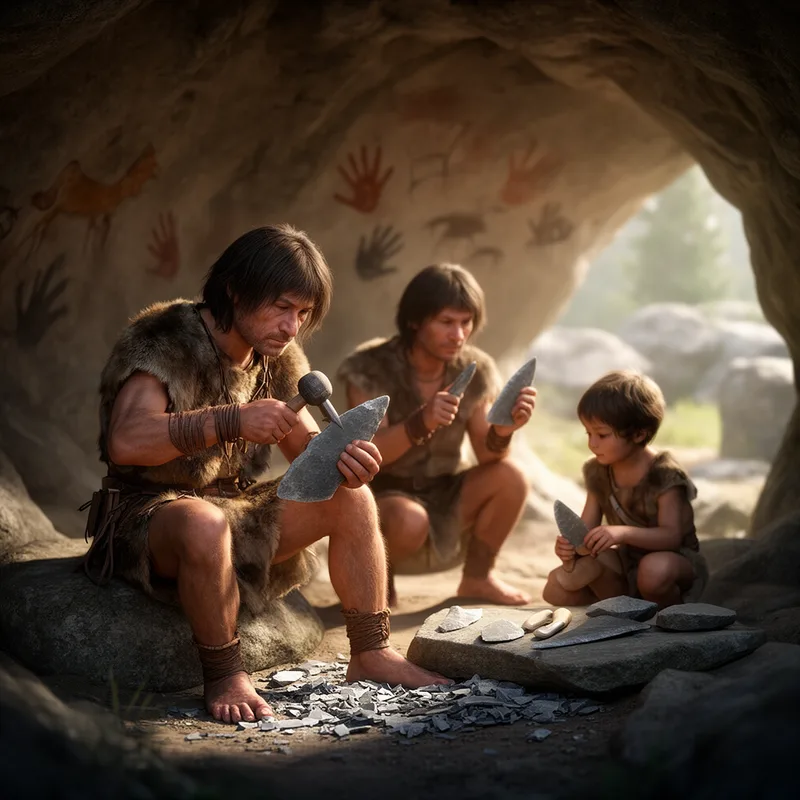
Paleolithic Age


 1
6.7
1
6.7
- noun
- /ˌpeɪlɪəˈlɪθɪk eɪdʒ/
- Specialized
- The basis of the diet is that you eat what our ancestors in the Paleolithic age did and reject foods that have been farmed, processed, or manufactured.
Examples
-
The Paleolithic Age, known for its early use of stone tools, laid the foundation for human development millions of years ago.
-
The Paleolithic Age lasted longer in Siberia because the ice shield melted more slowly there than it did in Europe.
Academic text (2000) -
Female sculptures occupy a prominent place in the art produced during the Paleolithic Age in eastern Europe and Siberia (Abramova 1995, 24).
Academic text (2000) -
For Howard Rheingold, VR originated in the initiation ceremonies that presumably took place in the painted caves of the Paleolithic age.
Academic text (1995) -
Archaeologists discovered numerous artifacts from the Paleolithic Age that provide insight into early human life and culture.
-
During the Paleolithic Age, humans were primarily nomadic hunter-gatherers, relying on their stone tools for survival.
Synonyms
 1
9.9
1
9.9
The early part of the Stone Age when people first made stone tools
How Old
- Specialized
1
6.7
 9
3.9
1
4.9
9
3.9
1
4.9
Surface Forms
Morphology
The meaning is directly compositional: 'Paleolithic' names the early Stone Age and 'age' means a historical period, so their combination denotes that specific period. This is a straightforward, cross-linguistically common formation, so a learner who knows both constituents would readily understand it.
Etymology
The name Paleolithic Age comes from two word parts: paleo meaning 'old' and lithic meaning 'stone'. It literally says 'old stone', because people then made simple stone tools, so the name now means the earliest part of the Stone Age.