

PI
 1
6.3
1
6.3

- noun
- /piː/
- Specialized
- In combination therapy, a PI is often used to inhibit the replication of the virus.
Examples
-
Recent studies show that a PI can effectively lower viral loads in patients with HIV.
-
A1-PI and A2-M are the two important proteinase inhibitors present in plasma.
Academic text (2007) -
Table 1 shows, in patients with COPD, emphysema, bronchiectasis, and bronchial asthma, a1-PI and a2-M concentration are increased as compared with control.
Academic text (2007) -
A 1-PI is the chief proteinase inhibitor present in the highest amount inhibiting the serine proteinases elastase and trypsin.
Academic text (2007) -
Similar to our study, Denchev and colleagues (1977) estimated the a1-PI in patients with bronchial asthma with different forms and severity of the disease. a1-PI was found to be elevated in all patient groups.
Academic text (2007) -
The doctor prescribed a PI to help manage the patient's HIV infection.
Synonyms
 5
5.3
5
5.3
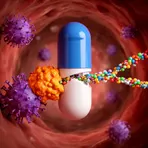
A medicine that stops enzymes from breaking proteins and treats HIV
Compounds


Surface Forms
Etymology
PI in medicine stands for protease inhibitor, where protease is a protein that 'cuts' other proteins and inhibitor means 'blocker' or 'stopper'. So a medical PI is a drug that 'blocks the protein cutter' and helps stop the virus from making more copies.