
Ottomanism
- noun
- /ˈɑːtəmənɪzəm/
- Specialized
- Many historians note that Ottomanism served as a foundation for a more inclusive society in the face of rising nationalism.
Examples
-
Each of the four other main political-ideological movements in Turkey, classified as Ottomanism, Westernism, Islamism, and Turkism, especially after the period of the 2nd Constitution, placed varying levels of emphasis on the protection of certain ideas and institutions that were remnants of the past.
Academic text (2000) -
Although the National Outlook Movement's ideology has been a mixture of Ottomanism, nationalism, modernism, and Islamism, it originally emphasized ethics and industrialization from 1973 to 1980, then justice and identity from 1983 to 1998, and then democracy and the rule of law from 1998 to the present.
Academic text (2000) -
Some have dubbed this approach "neo-Ottomanism."
Academic text (2012) -
The late Ottoman rulers' gradual shift from Ottomanism-Islamism to Turkism alienated the Arabs from the Ottoman Empire.
Academic text (2002) -
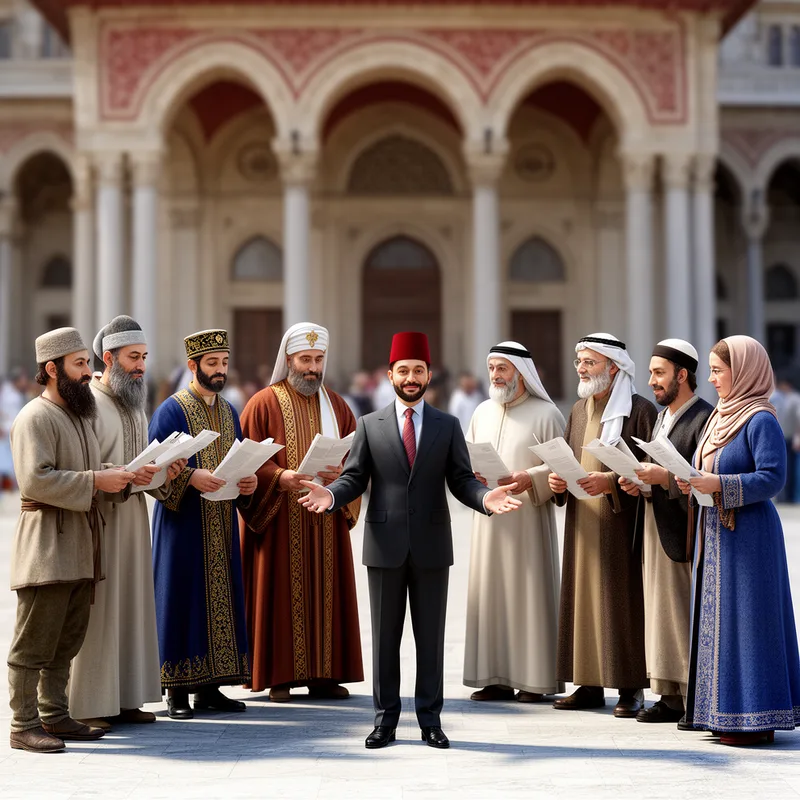
The concept of Ottomanism aimed to provide equal rights to all citizens within the empire, regardless of their ethnic background.
-
Advocates of Ottomanism believed in unity among the diverse peoples of the empire, promoting coexistence and mutual respect.
Synonyms

 17
5.5

A belief or policy that people from different cultures live together with equal rights
Surface Forms
Morphology
Etymology
Ottomanism comes from the name Osman, the leader who started the Ottoman Empire, so it means ideas that come from that empire. In the 1800s Ottomanism was a political idea to make all people in the empire equal and united, which is why the word means unity and shared citizenship.