
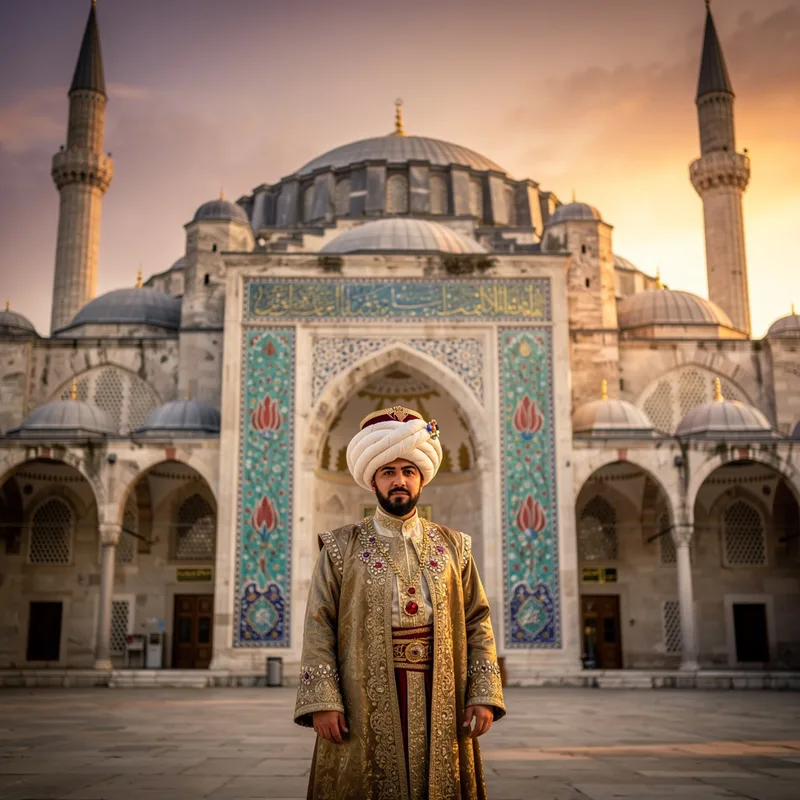
Ottoman
 34
7.8
34
7.8

- adjective
- /ˈɑːtəmən/
- After centuries of domination, the Ottoman Empire began to collapse
- Ottoman Empire
- Ottoman sultan
- Ottoman court
Loading YouTube…
Watch on YouTubeClass A, the most advanced, was reserved for former Ottoman provinces.
- Class A, the most advanced, was reserved for former Ottoman provinces.
- I mean, we would say Greek, but it's probably more like Ottoman Greek, right.
- Thing is, it wasn't just the British who soon noticed Ottoman aspirations in the region.
- And he's like, your ancestor was the Admiral of the Ottoman Navy when they conquered Constantinople.
- Because if they live, then they have either British law that was in place at the time or they have Ottoman law that was in place at the time prior to the occupation.
- He spends a lot of time in the Ottoman Empire, Turkey.
- Or more succinctly, who gets what part of the Ottoman Empire's carcass?
- I was just, my son was telling me about the Ottoman Empire, right?
- There were Jews in the area of Palestine under the Brits and under the Ottoman Empire for sure.
- What this means for Europe is that the Ottoman Empire now controls the standard trade routes to Asia.
- But the region, of course, is no stranger to invading powers with the Ottoman Empire, the Roman Empire, more recently the British Empire.
Examples
-
The architectural features of this building clearly reflect the Ottoman style, with intricate tile work and large domes.
-
All aspects of life were affected, causing change in the status of Ottoman women.
Academic text (2008) -
This is German, but in the sort of Ottoman style, right?
-
These wires are from ancient Ottoman society.
-
Both sides took losses, but the Ottoman advance was not slowed.
-
The plant then made its way to Turkey via the Silk Road, later becoming a symbol of the Ottoman Empire.
-
Despite the Ottoman Empire having stretched so far, this Turkish architecture still feels so distinctive and it's so beautiful.
-
Being the highest-ranking official of the Ottoman court, he was in constant contact with foreign ambassadors and visitors.
Academic text (2013) -
The Balkan countries emerged from centuries of Ottoman rule with little more than a desperately wished-for national identity.
Academic text (1999) -
During its height, the Ottoman Empire was known for its rich culture, particularly in art and literature.
Compounds
 16
5.2
16
5.2
A large Muslim empire from the late 1200s to World War I that ruled parts of Europe, Asia, and Africa
 1
7.8
1
7.8
A Turkish person who belonged to Osman I's ruling family that founded the Ottoman Empire

The Turkish royal family that ruled a large empire from the 1200s until after World War I
Surface Forms
Etymology
Ottoman comes from the Turkish name Osman, the founder of the empire, and the Turkish form Osmanlı originally meant 'of Osman'. So Ottoman came to mean 'belonging to Osman' and is used for things related to the Ottoman Empire, its people, and its culture.