
Old World coot
- noun
- UK
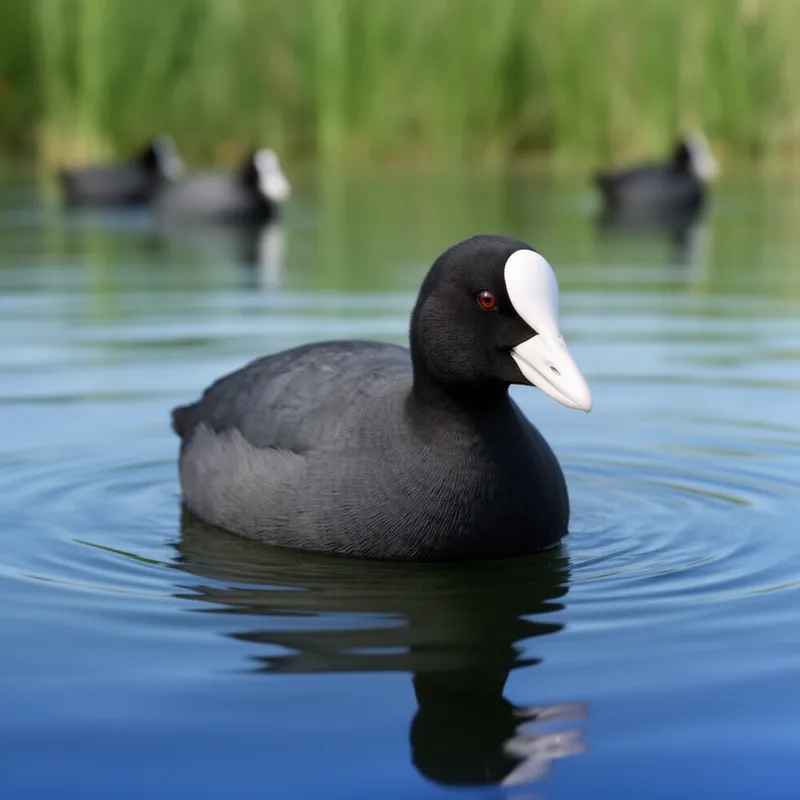
- Birdwatchers easily distinguish the Old World coot by its white frontal shield.
Examples
-
The Old World coot can often be seen swimming in lakes across Europe and Asia.
-
During migration, flocks of Old World coots gather in large freshwater wetlands.
-
The Old World coot is often found in wetlands.
-
Many Old World coots migrate during winter.
-
Birdwatchers easily distinguish the Old World coot by its white frontal shield.
-
The Old World coot can often be seen swimming in lakes across Europe and Asia.
-
During migration, flocks of Old World coots gather in large freshwater wetlands.
Synonyms
 19
8.5
19
8.5

A medium-sized dark water bird with a white beak and forehead that looks like a duck

A black water bird with a white bill often seen on lakes and rivers
Surface Forms
Morphology
The meaning is largely compositional: 'coot' denotes the bird and 'Old World' specifies the geographic origin (the Eurasian/Old World species), so knowing the parts gives a good clue. However, 'Old World' is a somewhat specialized historical/geographical term that many B1 learners may not know or treat as an idiomatic region label, so full understanding is not guaranteed without exposure.
Etymology
The name Old World coot says this is a coot from the Old World, meaning Europe and Asia. The bird's white beak and white patch on its forehead make it easy to spot, so the name tells you where it lives and how to recognize it.