
Old Icelandic
- noun
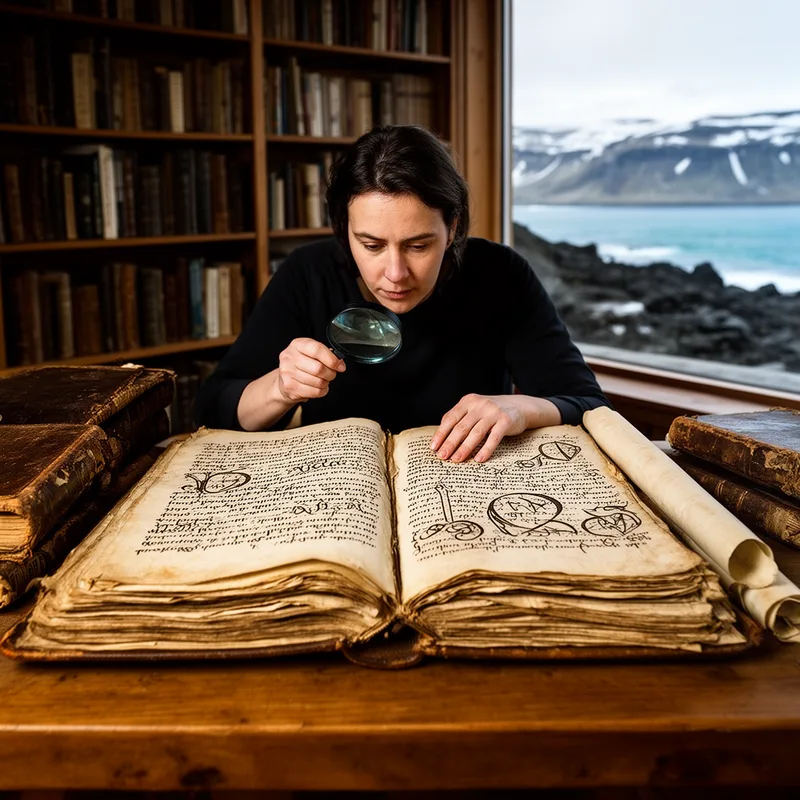
- I found a manuscript that contained stories written in Old Icelandic from the 13th century.
Examples
-
Researchers study Old Icelandic texts to gain insights into Viking culture and history.
-
The university offers a course on Old Icelandic to help students understand the roots of modern Icelandic language.
-
I had been searching for old Icelandic books, and sorrow had gotten the better of me when I was unable to find them.
Fiction book (2002) -
We have a rich history of the old Icelandic sagas, and they're usually named a bit similarly to that, so it just seems really fitting and resonant.
Blog text (8) -
La Tocnaye and Holland were also learned amateurs of Nordic antiquity and old Icelandic literature.
Academic text (1996) -
So they actually did get translated into English to be used in his writing and have their original form in Old Norse/Old Icelandic, which is close enough to modern Icelandic that they don't need to be translated.
Blog text (8) -
Gram also maintained that Old Icelandic is actually Old Danish and that Old English is even more closely related to modern Danish than Old Icelandic (1289).
Academic text (1996) -
Gram also maintained that Old Icelandic is actually Old Danish and that Old English is even more closely related to modern Danish than Old Icelandic (1289).
Academic text (1996)
Surface Forms
Morphology
The meaning is directly compositional: 'old' modifies 'Icelandic' to indicate an earlier/historical form of the language, so knowing the two words leads naturally to an interpretation of a former version of Icelandic. This 'Old + language' pattern is cross-linguistically common, making the expression readily understandable to a B1 learner who knows the constituents.
Etymology
Old Icelandic comes from the simple idea of Old and Icelandic: Old means 'from long ago' and Icelandic points to the language of Iceland. So Old Icelandic names the earlier form of Iceland's language used in old sagas and manuscripts and no longer spoken.

