

Olav II
- proper noun
- As Norway's patron saint, Olav II played a key role in the country's conversion to Christianity.
Examples
-
The legacy of Olav II is celebrated every year in Norway on St. Olav's Day.
-
King Olav II ruled Norway from 995 to 1030.
-
Many churches in Scandinavia are dedicated to Olav II, reflecting his lasting influence.
-
Many Norwegians celebrate the legacy of Olav II.
-
As Norway's patron saint, Olav II played a key role in the country's conversion to Christianity.
-
The legacy of Olav II is celebrated every year in Norway on St. Olav's Day.
-
Many churches in Scandinavia are dedicated to Olav II, reflecting his lasting influence.
Synonyms
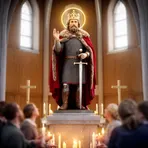


 1
8.9
A king of Norway from 1015 to 1028 who is the country's patron saint

A Norwegian king from around 1000 who became Norway's patron saint after his death
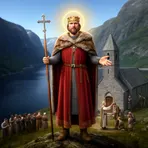
A king of Norway around 1000 who is the country's patron saint and helped make it Christian

A Norwegian king who is the country's patron saint and is famous for spreading Christianity
Surface Forms
Morphology
Olav + II
This is a proper name formed from a personal name and the Roman numeral II; a learner who knows 'Olav' is a name and 'II' means 'the second' can infer it refers to a specific person (Olav the Second). However, the constituents do not convey the encyclopedic information that he was King of Norway and a saint, so the full referential meaning is not derivable from the parts.
Etymology
Olav II was a Norwegian king who died in battle and was soon called a saint after people said miracles happened at his grave. Because of that story he became Norway's 'patron saint' and a strong symbol of the country's move to 'Christianity'.