
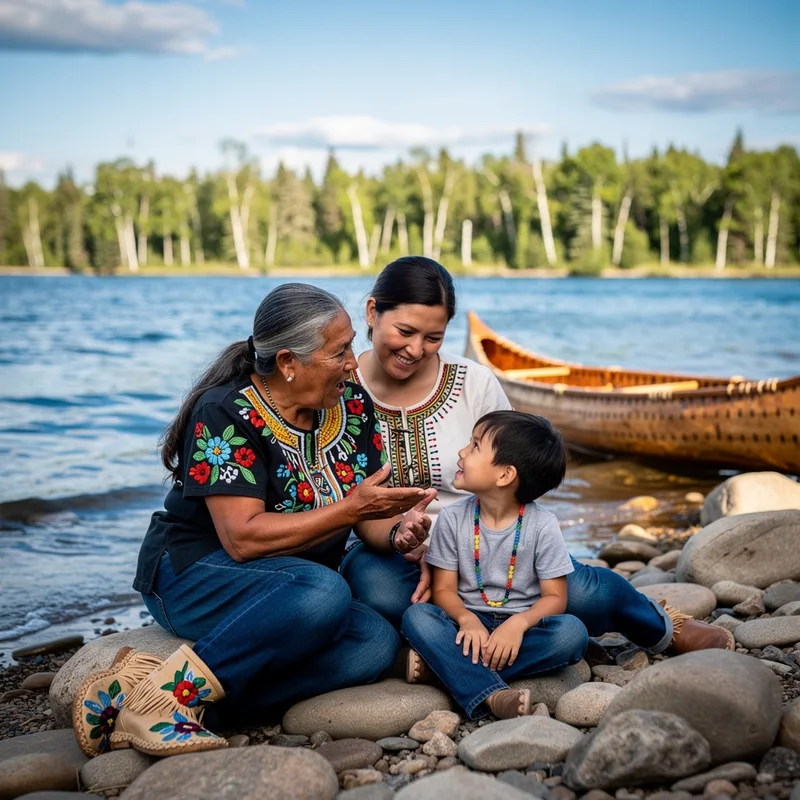
Ojibwe
 1
9.9

- proper noun
- /oʊˈdʒɪbweɪ/
- US
- In the 1837 and 1842 treaties with the United States, the Ojibwe reserved the rights to hunt, fish, and gather in ceded territory.
- Ojibwe harvested berries
- band of Ojibwe
- Ojibwe harvested
Examples
-
Resisting pressure to assimilate and facing a diminished land base, Ojibwe maintained their traditional seasonal activities to the greatest extent possible.
Academic text (2009) -
It's much the same in the lands of the Grand Portage Ojibwe.
Academic text (2009) -
The way of the Ojibwe is to consider seven generations ahead.
Academic text (2009) -
Please join me now in the Invocation, a prayer of the Ojibwe nation.
-
By the 1930s, the timber barons were gone, the government land office had closed, and most Ojibwe were poor.
Academic text (2011) -
Non-Indians could harvest timber and minerals, but Ojibwe could continue to live on and use the land.
Academic text (2009) -
Plant-based commodities were among the many other resources the Ojibwe traded during this period.
Academic text (2009) -
From the late nineteenth century onward, Ojibwe asserted their rights and challenged state laws through litigation.
Academic text (2009) -
In 1999, the United States Supreme Court affirmed that the Ojibwe retained the usufructuary rights reserved in the 1837 treaty.
Academic text (2009) -
The way of the Ojibwe is to consider seven generations ahead.
Synonyms
 3
9.9
A person from a Native American people living around Lake Superior in Canada and the northern United States
 1
9.5
A Native language spoken around Lake Superior by Ojibwe people


 1
9.8
A language spoken by the Ojibwa people in parts of Canada and the northern United States

A language spoken by the Ojibwa people in North America

A language spoken by the Ojibway people in parts of Canada and northern United States
Surface Forms
Etymology
Ojibwe is the English name for a Native people of the Great Lakes and their language, and it is sometimes written as Chippewa. They call themselves Anishinaabe, which means 'original people', so Ojibwe is simply the people's own name for themselves.