
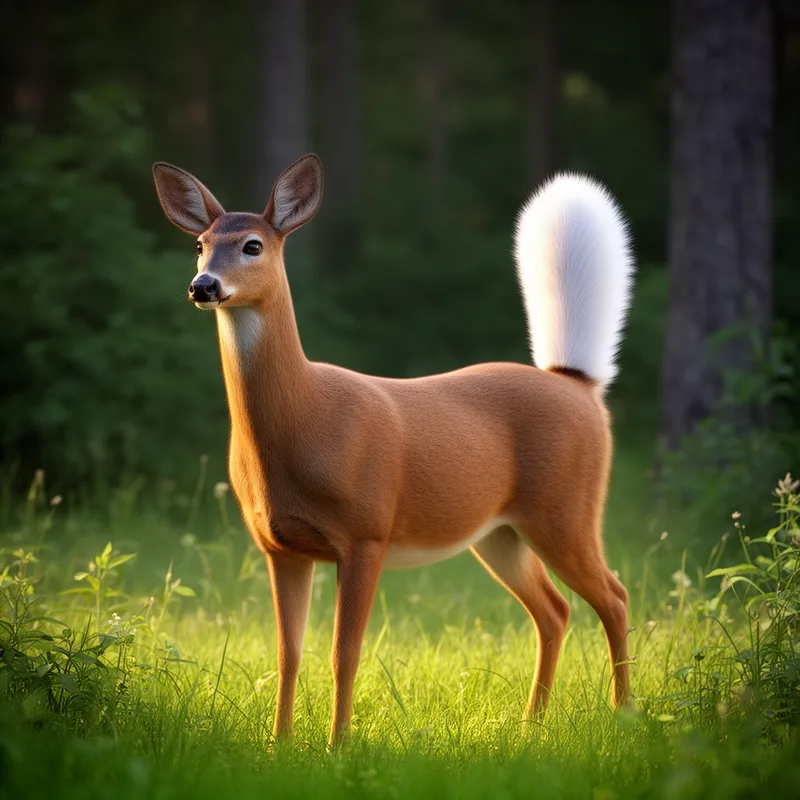
Odocoileus virginianus
- noun
- /ˌoʊdəˈkɔɪliəs vɜrˈdʒɪniənəs/
- Specialized
- The distinctive white underside of the tail makes Odocoileus virginianus easy to identify in the wild.
Examples
-
Wildlife biologists often study Odocoileus virginianus populations to monitor ecosystem health.
-
The Odocoileus virginianus is widely distributed throughout North America from Canada to Central America.
-
The Odocoileus virginianus is known for its distinctive white tail.
-
Many people enjoy watching Odocoileus virginianus in their natural habitat.
-
The Odocoileus virginianus is commonly found in forests and fields across North America.
-
Hunters often seek the Odocoileus virginianus during the autumn season for sport and food.
-
In spring, the Odocoileus virginianus gives birth to fawns, which quickly learn to navigate their environment.
Synonyms

 5
3.7
5
3.7

A North American deer with a white underside to its tail that it shows when scared
 2
2.8
2
2.8
A North American deer with a white underside to its tail that it raises when scared
 1
2.4
1
2.4
A North American deer with a white tail that lifts when it is scared


 1
3.0
1
3.0
A deer with white fur under its tail
A common North American deer with a white underside to its tail
Surface Forms
Morphology
Odocoileus + virginianus
This is a scientific binomial (genus + species). A B1 learner who knows 'Odocoileus' as a genus of deer can infer it refers to a kind of deer, but the Latin species epithet 'virginianus' (and the specific common name 'white-tailed deer') is not transparently derivable from ordinary English vocabulary, so the full meaning is only partially accessible.
Etymology
Odocoileus virginianus is a scientific name with two parts. The second part, virginianus, means 'from Virginia', and the first part, Odocoileus, is the genus name for the North American white-tailed deer, so the full name basically says the deer 'from Virginia' and that helps you remember it.