
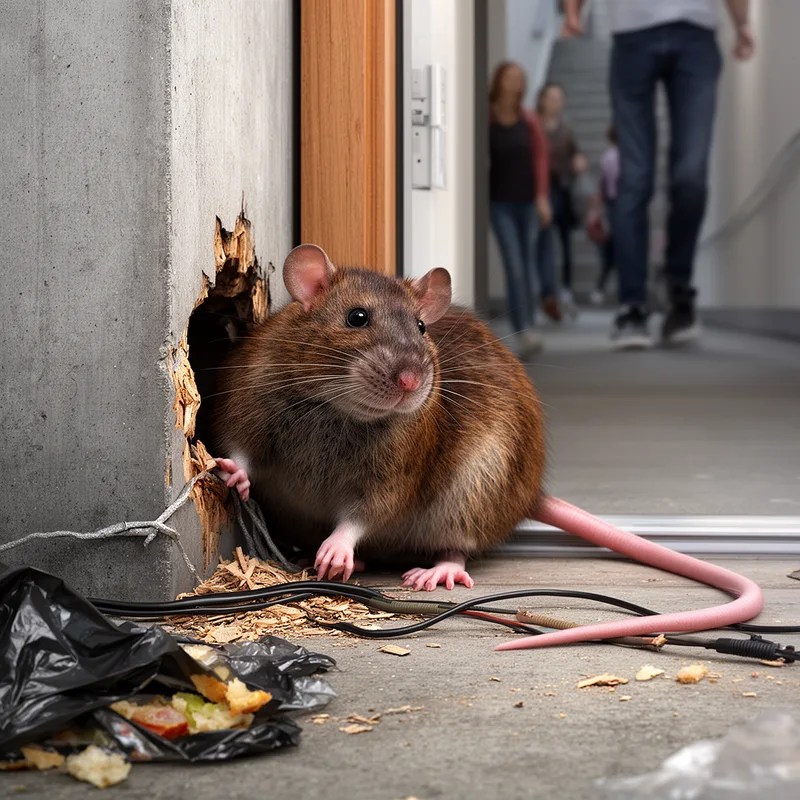
Norway rat
 1
4.2
1
4.2

- noun
- /ˈnɔrweɪ ræt/
- Residents are worried about the Norway rat population increasing, as they can damage property and spread disease.
Examples
-
Very small mammals are scarce (no voles and only introduced house mice), while larger ones are relatively common (roof rats, Norway rats, rabbits, hares, and Australian brush-tailed possums).
Academic text (1991) -
"There's no demonstrated health risk from flushed-out rats," said Mr. Miller, noting that the predominant species in the city was the Norway rat.
Blog text (32) -
For example, the eradication of Norway rats from Mokoia Island in New Zealand was followed by greatly increased densities of mice, also alien species.
Academic text (2004) -
For example, Seoul virus has been found in Norway rats (Rattus norvegicus) and black rats (Rattus rattus) in urban areas throughout the United States (30, 31).
Academic text (2013) -
The Norway rat is often seen scavenging in urban areas, making it a common pest problem for homeowners.
-
In cities, the Norway rat thrives, easily finding food in garbage bins and alleyways.
Synonyms


 1
2.1
1
2.1
A common rat that lives near people and damages food and buildings

A common brown rat that lives near people, often found in cities and sometimes kept as a pet
Surface Forms
Morphology
The phrase is a simple noun compound built from 'Norway' + 'rat', so a learner who knows both words will infer it denotes a type of rat associated with Norway. This compositional pattern (place-name + animal = species/variety) is cross-linguistically common and makes the meaning accessible, even if the scientific range of the species is not deducible from the name alone.
Etymology
Norway rat may come from old trading ships from Norway that brought big brown rats to British ports in the 1700s, so people began to call this animal by that place name. That's why Norway rat now means the 'large brown rat' often found in towns and buildings.