

Myxomycota


 1
9.9
1
9.9
- noun
- /mɪksoʊˈmaɪkəˌtə/
- Specialized
- The Myxomycota are fascinating organisms studied by biologists.
Examples
-
Scientists studying forest ecosystems often examine the diversity of Myxomycota present in decaying wood.
-
The Myxomycota are notable for their unique life cycle, alternating between unicellular and aggregate forms.
-
Unlike true fungi, Myxomycota exhibit a vegetative stage that is multinucleate and noncellular.
-
Many species of Myxomycota thrive in damp environments.
-
The Myxomycota group consists of fascinating organisms that play a crucial role in decomposing organic matter.
-
Researchers observed the life cycle of a Myxomycota in their laboratory, noting its unique spore-producing stage.
-
Many scientists study Myxomycota for insights into the evolution of multicellularity in organisms.
Synonyms

A group of fungus-like living things called slime molds
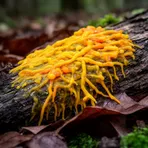
A group of simple living things called slime molds that move and form visible colonies
Surface Forms
Morphology
Myxomycota = myxo + mycota
A specialized Neo-Latin taxonomic formation from Greek combining forms ('myxo-' = slime, '-mycota' = a fungal division); the meaning is technical and not derivable by an average B1 learner from its parts.
Etymology
Myxomycota comes from two old Greek parts, myxo- meaning 'slime' and -mycota meaning 'fungus', as in mycology. So Myxomycota can be remembered as 'slime fungi', which fits these slimy organisms that look like mold and were once grouped with fungi.